Book an Appointment
NCCT TM Joint
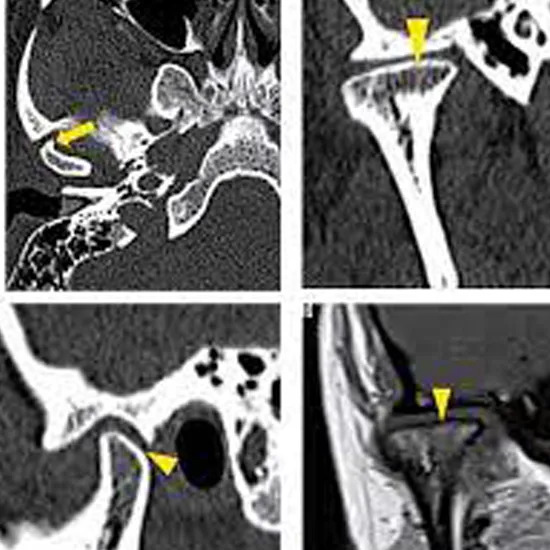
The NCCT TM joint by Medifyhome Healthcare is an advanced radiography technology designed to help get detailed assessments of the TMJ in an exceedingly precise way. Noncontrast computed tomography enables patients to acquire a lot more information about their anatomy and anomalies as opposed to traditional imaging technologies when exploring joint disorders, arthritis, and trauma of the TMJ. The NCCT TM Joint helps doctors make proper judgments about the kind of treatment needed, which is eventually taken care of by treating jaw pain or dysfunction in patients. Medifyhome Healthcare has upgraded this service with quality and innovation so that timely interventions can be provided for the proper care of a patient.
Indications for Non-Contrast CT in TM Joint
- Evaluation for Fractures or Dislocations of TMJ and surrounding structures due to trauma
- Evaluation for joint disorders with possible causes including osteoarthritis, rheumatoid arthritis, and internal derangement of TMJ.
- Evaluation of the presence or absence of any tumor in the region of TMJ and characterization
- Anatomical Abnormality: Due to any developmental abnormalities or structural deformities from birth or in its developing stage involving the joint
- Chronic Pain investigation- Patients experiencing chronic pain in the jaw that is supposed to find some pathology.
Imaging Techniques
Axial images: Provide cross-sections are useful to assess a detailed structure inside the TMJ and related anatomy around it.
2.Coronal imaging: This gives anterior-to-posterior slice views that are going to be helpful in assessing whether the mandibular condyle has a satisfactory relationship to the glenoid fossa.
3. Sagittal imaging: Gives lateral views that are good for assessing joint morphology and detecting anomalies.
4.3D Reconstruction: Advanced software techniques create a three-dimensional model of the TMJ to help in visualization and preoperative planning.
5.Bone Window Settings: After making adjustments for better visualization of bony structures through the CT settings, the various types of fractures, erosions, or any other changes in osseous structures are evaluated.
Preparation and Positioning for NCCT of the TM Joint
Preparation for a non-contrast computed tomography of the temporomandibular joint requires proper attention to several steps before any imaging is performed. Among these, obtaining an accurate medical history from the patient is important, particularly for pre-existing TM joint conditions, along with ascertaining that no contraindications exist that would prevent the test. The patient should be appropriately instructed on the process, with consent obtained if needed. Before scanning, the metallic items are removed, and all those clothes with no metallic fastenings are. The patient lies down, sitting or supine, with the head in neutral so that the occlusal plane is parallel to the floor. The minimization of movement can be achieved with head stabilization, and the TM joint must be centered in the CT gantry. To obtain appropriate images, proper instructions should be given to the patient to remain still during the scan.
Advantages and Limitations of NCCT in TM Joint
No Contrast Required: It is a non-contrast procedure and avoids any kind of allergic reaction or complications from contrast media; it is much safer for patients who have contraindications.
2. Bone Evaluation: NCCT is particularly useful in the assessment of osseous anomalies by providing a clear morphological appearance of bone and alignment from the point of view that determines treatment.
3.Radiation Exposure: Although the dose is low, NCCT is a radiation modality that uses ionizing radiation, which can be harmful, especially if it has to be repeated frequently in children.
4. Limited Soft Tissue Evaluation: Although NCCT is excellent for imaging bones, it provides limited detail for muscles, ligaments, and the disc of the TM joint, whose evaluation might be better done through MRI.
- Test Type: NCCT TM Joint
- Preparation:
- Wear a loose-fitting cloth
- Fasting not required
- Carry Your ID Proof
- Prescription is mandatory for patients with a doctor’s sign, stamp, with DMC/HMC number; as per PC-PNDT Act
- Reports Time: With in 3-4 hours
- Test Price: Rs.3000
How do you treat a TM joint?
TM joint treatment may include physical therapy, pain management, dental appliances, or surgery, depending on the underlying condition.
Where is the TM joint located?
The TM joint is located where the jawbone (mandible) connects to the skull, just in front of the ear.
What is the main cause of TMJ?
The main cause of TMJ disorders is often related to a jaw injury, arthritis, or teeth grinding (bruxism).
What can I expect during the procedure?
During the procedure, you can expect to lie still while the CT scanner takes quick images of your TM joint without the use of contrast.
How soon will I receive the results?
You will typically receive the results of your NCCT scan within a few days after the radiologist interprets the images.
How do I schedule an NCCT scan?
You can schedule an NCCT scan at Medifyhome by contacting their customer service or using their online booking platform.
Most Booked Ct Scan Parts
With Medifyhome, book a CT scan get the fastest appointment scheduling at NABH & ICMR Certified diagnostic centers near you. Trusted reports, expert radiologists, and seamless service-only a click away!
Why Choose Medifyhome for the NCCT TM Joint?
Medifyhome for your healthcare needs offers several benefits, in which the needs of the patient are very well considered, and convenience is emphasized. Medifyhome provides a smooth experience with its intuitive platform that makes it easy to schedule appointments and access various medical services. Medifyhome focuses on high-quality care and connects patients with experienced healthcare professionals and specialists who dedicate themselves to delivering tailor-made treatment plans. In terms of transparency, services provided, costs, and the kind of reviews patients give are visible to you, so you can make the right choices. Medifyhome, being committed to technology, generally facilitates smooth healthcare experiences.