
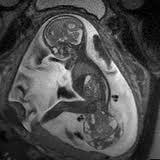
MRI Fetus
Book your MRI Fetus at Medifyhome, where we offer top-quality scans at the best prices. Our NABL & NABH accredited diagnostic centers ensure accurate and reliable results.




Book an Appointment
MRI Fetus
Medifyhome‘s advanced MRI Fetus offers a service that introduces the expectant mother to the most detailed and accurate imaging of her unborn child. A magnetic resonance imaging scan on a fetus is a non-invasive activity from outside the womb to assess health and development in the uterus. It is especially useful when not enough information has been delivered with ultrasounds, as it will provide a much clearer look into fetal brain development and structural anomalies among other complications that may arise.
A fetal MRI is a scan that poses no risk to both the mother and the child, without any hazardous X-ray radiation exposure. It is highly indicated for studying a wide range of anomalies: from congenital malformations and brain malformations to spinal ones. Medifyhome, works together with well-recognized medical facilities and professional radiologists, who work to ensure that the best quality of care is provided to patients. If you have been indicated to carry out a fetal MRI, Medifyhome, grants you quick access to this diagnostic tool of the latest generation, accompanying you through the whole procedure comfortably and professionally. Trust Medifyhome, for safety and exactitude, with support throughout your pregnancy. Book an appointment for an MRI Fetus at Medifyhome, portal at a cost-effective price.
Overview
Specification
FAQ
Overview
Why is MRI Used for Fetal Imaging?
It provides a very clear and high-resolution image of the organs, brain, and general development of the unborn baby. Unlike ultrasound, which at times cannot give clear views, MRI provides a clearer and more detailed look at the fetus in complicated pregnancies or when a possible abnormality is suspected. It helps in the detection of structural abnormalities, detection of brain or spinal malformations, and in the assessment of other conditions that may involve congenital defects or abnormal growth. MRI offers a safe, non-invasive way of monitoring the fetus without risking radiation exposure; thus, it is very valuable both in early and late pregnancy assessments.
When is an MRI of the Fetus Needed?
When the ultrasound results cannot show clear details or in cases of suspicion of abnormalities in the fetus, an MRI of the fetus is required. In conditions relating to high-risk pregnancies, for example, maternal health disorders such as diabetes or hypertension, an MRI is prescribed. It can also be used in the evaluation of fetal development, especially in instances of growth limitations or when one suspects structural defects in the brain, heart, or spine. It can also be used to assess fetal development, especially in the event of growth restriction or when structural defects in the brain, heart, or spine are suspected. It is also appropriate for assessing fetal development, particularly in cases where growth restriction has occurred or when defects in the brain, heart, or spine are suspected. This can also be done during tests involving the placenta or uterus, especially where complications such as fibroids have been recorded. This imaging modality offers a lot of information to the medical personnel for proper decision-making and health assurance for both mother and baby.
Conditions Detected by Fetal MRI
Fetal MRI is an efficient imaging technique that helps in diagnosing many conditions in a pregnant woman, giving detailed images of the fetus and structures surrounding it. The diagnosis for the following conditions can be made by fetal MRI:
1.Brain Abnormalities: Hydrocephalus, malformation of the brain, or focal area of the brain damage.
2.Spinal Defects: Spina bifida and other neural tube defects.
3.Heart Abnormalities: These are structural heart defects or blood vessels.
4.Facial Abnormalities: The facial anomalies, such as cleft lip or palate.
5.Organ abnormalities: lungs, kidneys, and gastrointestinal tract.
6.Placental Abnormalities: Abnormalities of the placenta conditions involving the placenta, such as accreta or previa.
7.Growth Restriction: A problem in the growth and development of the fetus.
8.Congenital Malformations: Limb abnormalities, facial deformity, skeletal malformations.
Benefits of Fetal MRI
Major advantages of Fetal MRI include being a non-invasive, high-resolution technique that delineates details and abnormalities not as clearly revealed on ultrasound. It is very helpful for the diagnosis of malformations in the brain, spine, and other organs since one gets very clear images of soft tissues.
MRI itself does not use radiation; hence, it does not cause harm to the mother or the baby. It also helps in treatment planning. The health professionals are, therefore, able to make informed decisions on whether to conduct early interventions or delivery. In other words, fetal MRI allows an increase in the monitoring of high-risk pregnancies, the accuracy of diagnosis, and possibly even improved outcomes for mother and child.
Safety precautions
If performed under proper conditions, MRI is not notably harmful to the pregnant woman and fetus. It doesn’t use ionizing radiation that would be used in X-rays or CT scans. In this respect, MRI is much safer for pregnancy than imaging techniques such as X-rays. Generally speaking, MRI examinations are recommended after the first trimester of pregnancy except in absolute necessity. MRI contrast media also does not result in significant side effects but needs to be dealt with cautiously. Pregnancy should be reported to the healthcare professional, who would weigh the benefits against the risks to make sure the procedure would be suitable for both mother and baby.
Who Should Consider a Fetal MRI?
Fetal MRI can be advised to pregnant ones who feel concerned about the health or development of their baby. In general, it is considered in cases where ultrasound scans provide clues on abnormalities or in conditions requiring detailed clarification: congenital defects, brain abnormalities, and problems with organs. Fetal MRI also applies when one has a high-risk pregnancy, such as advanced maternal age, multiple pregnancies, and genetic disorders. A doctor will recommend an MRI depending on the specific condition and individual case of both the mother and the fetus.
Specification
- Test Type: MRI Fetus
- Preparation:
- Wear a loose-fitting cloth
- Fasting not required
- Carry Your ID Proof
- Prescription is mandatory for patients with a doctor’s sign, stamp, with DMC/HMC number; as per PC-PNDT Act
- Reports Time: With in 3-4 hours
- Test Price: Rs.3000
FAQ
Can I have an MRI if I am early in pregnancy?
Fetal MRI is usually advised during the second trimester or after since the organs of the baby are developed to have all the details imaged.
What is the procedure to book an MRI FetusI with Medifyhome?
One can easily book an MRI Fetus through their website at Medifyhome or through their customer support via phone at +91 9100907036 or +91 9100907622.
Are there any risks from Fetal MRI?
There is a very low risk of Fetal MRI. The main concern is one of keeping the mother comfortable lying still during the scan.
Is a fetal MRI safe in pregnancy?
Yes, fetal MRI is a safe examination for both the mother and the baby.
Why may a fetal MRI be indicated?
Fetal MRI supplies pictures of the baby’s organs and tissues in detail when there is concern about developmental abnormalities, brain, spine, or other organ problems.
Why Choose Medifyhome, for MRI Fetus?
Medifyhome, gives you several advantages in choosing your fetal MRI. At Medifyhome, we can give you access to the latest in MRI technology that allows for high-quality, detailed imaging with the view of proper diagnosis of conditions affecting the fetus. Our team is composed of highly professional radiologists and obstetric specialists. Great attention to the safety and comfort of both mother and child is observed. At Medifyhome, our network of trusted healthcare providers ensures that you get timely, caring treatment in comfortable surroundings. Medifyhome, brings it all to you at an affordable price. Booking an appointment is easy, thus making it a one-stop for all advanced diagnostic needs to keep you and your baby’s health in the best state possible.