
Indirect Coombs Test Cost in Vijayawada
Are you Looking for a Lab that carries out the Coombs test in Vijayawada ? Wish to get a home-based sample? Medifyhome is here to help. But firstly, why a Coombs test?
Book Indirect Coombs Test at Home Now!!
What is the Coombs test used for?
To begin, it is critical to recognize that there are two types of Coombs tests: direct and indirect
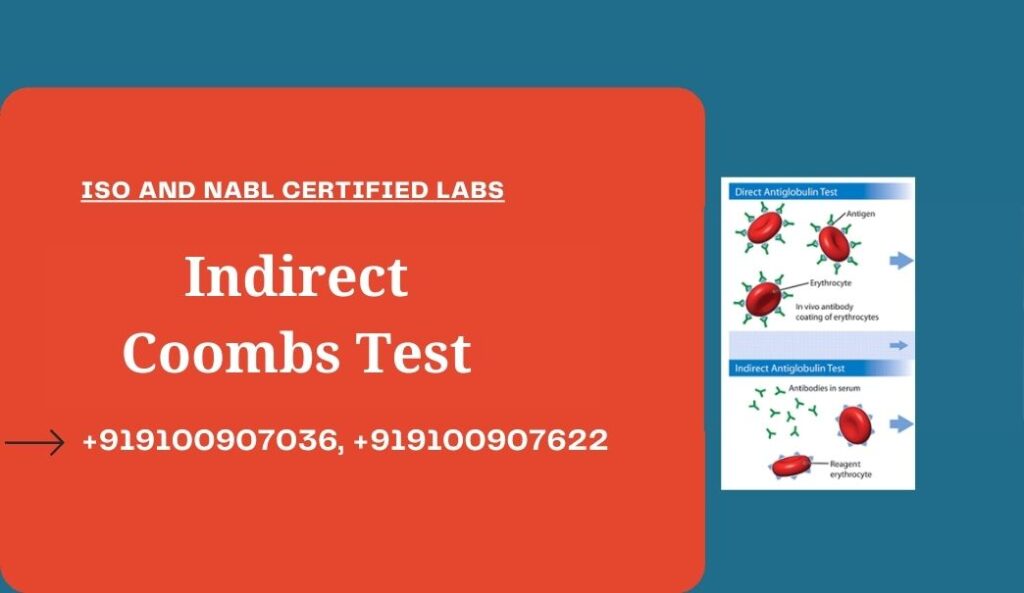
The direct Coombs test (also known as a direct antiglobulin test) checks your red blood cells to see if antibodies are attached to them. It is widely used to diagnose blood abnormalities such as autoimmune hemolytic anemia. Autoimmune hemolytic anemia patients do not have enough red blood cells because their bodies destroy them too rapidly. The indirect Coombs test indicates to your doctor whether you have antibodies in your blood that may attach to red blood cells. It is used to predict your reaction to a blood transfusion. As part of the diagnostic process, an indirect Coombs test is also done on a regular basis.
Our labs
Bharat Diagnostics
Lab tests and Home blood sample collection
Door No 29-6-23, Nakkal Road, Suryarao Pet, Vijayawada, Andhra Pradesh – 520002
+919100907036, +919100907622
Bandaru Diagnostics
Lab tests and Home blood sample collection
Beside Dr Rama Rao Hospital, Kasturibaipet, Vijayawada, Andhra Pradesh – 520010
+919100907036, +919100907622
Yasesvi Diagnostic Centre
Lab tests and Home blood sample collection
29-26-15, Vemurivari Street, Dornakal Road, Near Andhra Bank ATM, Suryarao Pet, Vijayawada, Andhra Pradesh – 520002
+919100907036, +919100907622
FAQs
Your healthcare provider will use a small needle to take blood from a vein in your arm or hand. You may feel a slight “pinch” or “prick” on your skin as the needle is introduced. After collecting the sample, it is sent to a laboratory for examination. Your doctor will bandage the area where the needle was inserted. Remove the bandage after 10 to 20 minutes.
A positive Coombs test generally indicates anemia or jaundice. If your baby tests positive, your doctor will evaluate him or her and advise you on the best next steps.
The typical cost of the test is roughly 300 rupees, which varies depending on whether it is collected at home or in a lab.
There is no risk in taking the exam. However, because this test requires a needle prick to obtain a blood sample, in extremely rare cases, a patient may experience increased bleeding, hematoma formation (blood collection beneath the skin), bruising, or infection at the site of the needle prick.