
World Sleep Day: Health Benefits & Tips for Better Sleep

Table of Contents
What is World Sleep Day?
Have you ever stopped and thought about the role that sleep plays in your life? From the way you wake up in the morning to the way you perform at work, sleep is responsible for everything. Unfortunately, millions of people worldwide are not sleeping well. This is the exact reason for the existence of World Sleep Day. World Sleep Day is celebrated worldwide on a particular day to remind everyone about the importance of sleep for leading a healthy life. It is organised by the World Sleep Society, which is a collection of the world’s best sleep experts and medical professionals working for the betterment of sleep health worldwide. On World Sleep Day, medical experts, hospitals, schools, and other healthcare organisations worldwide come together with a single agenda: to educate everyone about the importance of sleep and raise awareness about sleep problems.
Theme of World Sleep Day 2026
Every year, World Sleep Day is celebrated with a special theme. This theme acts as the central message of the entire event. It guides awareness campaigns, health programs, and educational activities happening across the world on this day.
The official theme for World Sleep Day 2026 is:
"Sleep Well, Live Better"

This is not just a tagline. It is a significant message that associates sleep with the quality of life you live. It is telling us that the way you sleep is going to impact the way you live in a significant way.
Why Sleep Is Important for Overall Health
We are in a world where being busy is considered great. We walk around saying, “I only had 4 hours of sleep last night,” as if it is a badge of honor. The truth is, it is not. One of the worst things you can do to your body and brain is not get enough sleep. Sleep is not a waste of time. Sleep is not laziness. Sleep is one of the strongest tools we have available to us as human beings, and it is free of charge. Yet it is probably one of the least utilized and least respected tools we have available to us.
Why exactly is sleep so important? Let’s understand this in a simple and clear way.
Sleep is a Basic Human Need
Just like how your body needs food, water, and air to survive, it needs sleep too. Without food, you can survive for weeks. Without water, you can survive for a few days. Without sleep, however, the human body starts to break down within a few days. This is because sleep is when your body is performing its most vital maintenance work. Every night, while you’re asleep, your body is working hard at:
- Repairing damaged cells and tissues
- Consolidating memories and processing information
- Strengthening the immune system
- Regulating hormones and metabolism
- Protecting the heart and blood vessels
- Regulating moods and emotions
Sleep and Your Physical Health
One of the most important reasons to sleep well is the direct impact it has on your physical health. Research has consistently shown that people who get quality sleep are healthier, stronger, and live longer.
Heart Health
Having enough sleep is essential to maintaining heart health. During deep sleep, the heartbeat slows down, and blood pressure decreases, allowing the heart to relax. Those who sleep less than 6 hours have increased risks of high blood pressure, heart-related diseases, and stroke.
Blood Sugar and Diabetes
Sleep impacts the level of blood sugar in the body. Lack of sleep can cause difficulties in using insulin in the body, which can cause high levels of blood sugar. This can eventually cause Type 2 diabetes.
Weight Management
Sleep can cause individuals to gain weight. When an individual does not have enough sleep, their body increases levels of hunger hormones and decreases fullness hormones. This can cause them to feel hungry and want to eat more junk foods.
Immune System
While sleeping, the body is able to strengthen the immune system. The body produces proteins during this time, which are essential in fighting infections and inflammation.
Muscle and Tissue Repair
While sleeping, the body is able to repair muscles and bones. The body releases growth hormones during deep sleep, which are essential in repairing muscles and bones, especially after physical activities.
The Science of Sleep: How Sleep Works

Have you ever wondered what really goes on inside your own body as you shut your eyes at night? Most people tend to believe that sleep is just a phase of life where the human body “shuts down” and just rests. The truth is, however, much more intriguing. One of the most complex, active, and scientifically intriguing processes that occurs inside the human body is sleep. As you are lying still in your bed, sleeping, your brain and body are working harder than you can ever imagine. Learning about the science of sleep can help you realize just how important it is and just how much it can do for you.
What Happens in Your Body When You Sleep?
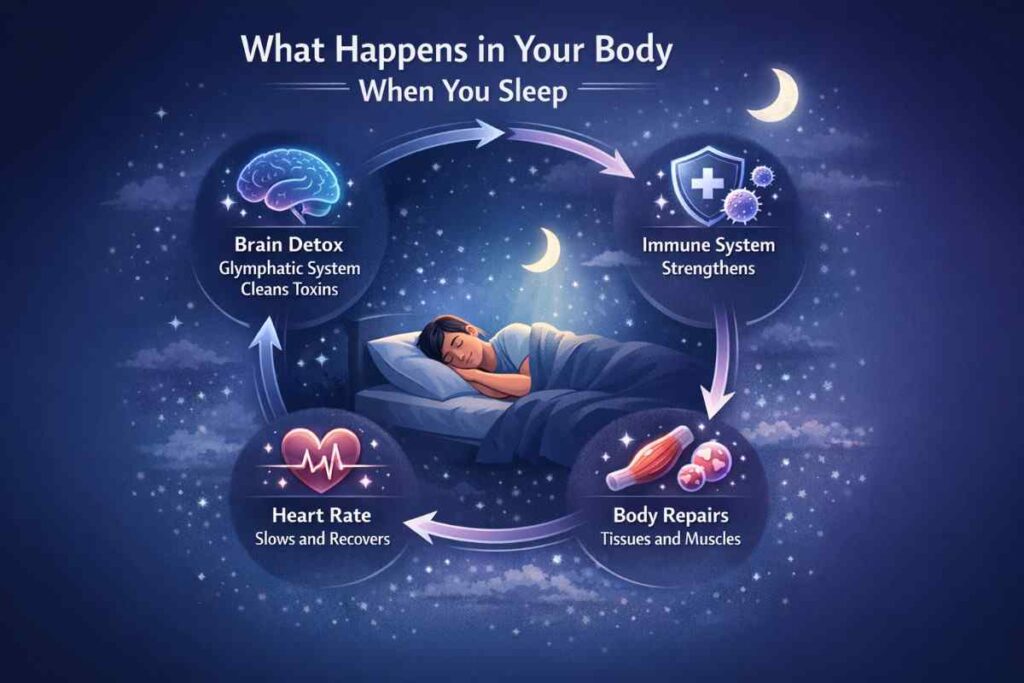
The moment you drift off to sleep, your body undergoes a series of processes. These processes are a part of a highly intelligent system that nature has provided to keep you healthy, sharp, and strong.
Your Brain Gets a Deep Clean
The brain is a highly intelligent part of your body. The moment you sleep, your brain undergoes a series of processes known as the glymphatic system. This system is highly effective in removing all harmful waste products and toxic proteins from your brain, like the Beta Amyloid, which is a known cause of Alzheimer’s. This is like a mini-brain clean-up mechanism.
Your Immune System Gets Stronger
The moment you sleep, your body releases cytokines, which are small proteins that are highly effective in fighting infection, inflammation, and stress. This is the reason you always feel like sleeping whenever you are sick.
Your Body Repairs Itself
Sleep is like a mini-repair mechanism for your body. Your body is constantly repairing damaged cells, building up your muscles, and repairing tissues.
Your Heart Rests and Recovers
The moment you go to sleep, your heart beats more slowly, and your blood pressure goes down. This is like a mini-vacation for your heart.
Stages of Sleep Explained
Most people have this notion that sleep is just stillness and quietness, and it is supposed to occur during the night. However, sleep is not just stillness and quietness; it is a dynamic and organized process. Every night, your body goes through a series of sleep stages, and each stage has its own role to play in the context of your health and well-being. The stages of sleep will enable you to understand the significance of the quality of sleep as much as the quantity of sleep. It’s not just the number of hours of sleep that matters, but the quality with which your body goes through the stages of sleep.
Sleep Cycle Order:
Stage 1 → Stage 2 → Stage 3 → REM → Repeat (4–6 cycles per night).(Image)
| Stages | Stage 1 – Light Sleep (N1) | Stage 2 – Light Sleep (N2) | Stage 3 – Deep Sleep (N3) | REM Sleep – Dreaming Stage |
|---|---|---|---|---|
|
Type
|
Light Sleep |
Light Sleep |
Light Sleep |
Dream Sleep |
|
Def |
Transition from wakefulness to sleep. The body begins to relax.
|
The body enters a deeper sleep than Stage 1. |
The deepest and most restorative stage of sleep. |
This stage ismost dreaming occursand brain activity increases
|
|
Key Features
|
Slow eye movement, relaxed muscles, easy to wake, brain activity starts slowing.
|
Heart rate slows, body temperature drops, and brain waves slow with bursts of activity.
|
Tissue repair, growth hormone release, strengthened immune system |
Rapid eye movement, increased brain activity, irregular breathing
|
|
Sleep Duration |
1–5 minutes |
10–25 minutes |
20–40 minutes |
10–60 minutes |
Recommended Sleep Duration by Age
One of the most frequently asked questions about sleep is: How much sleep do I need? Well, the answer is not the same for everyone. The amount of sleep that your body needs varies depending on your age. Sleep needs are the highest during the early years of life because your body and brain are developing and growing at the fastest rate during these early years. With increasing age, the sleep needs gradually reduce, but they are still important at every stage of life. At every stage of life, the correct amount of sleep is important for good health, immunity, brain function, and emotional stability.
| Age Group | Recommended Sleep Duration |
|---|---|
|
Newborns (0 to 3 months)
|
14 to 17 hours per day |
|
Infants (4 to 11 months)
|
12 to 15 hours per day
|
|
Toddlers (1 to 2 years)
|
11 to 14 hours per day
|
|
Preschoolers (3 to 5 years)
|
10 to 13 hours per day
|
|
School-age Children (6 to 13 years)
|
9 to 11 hours per day |
|
Teenagers (14 to 17 years) |
8 to 10 hours per day |
|
Young Adults (18 to 25 years) |
7 to 9 hours per day |
|
Adults (26 to 64 years) |
7 to 9 hours per day |
|
Older Adults (65 years and above) |
7 to 8 hours per day |
Health Benefits of Good Sleep
Having enough quality sleep is important in the maintenance of one’s health and well-being. This is because sleep is important and provides the body and mind with an opportunity to rest and rejuvenate after a long day of activities. During sleep, critical processes take place in the body, which are important in the maintenance of brain functions, building up the immune system, and controlling various bodily functions. Conversely, lack of sleep results in fatigue and stress, and can lead to various health problems, such as heart problems, diabetes, and obesity. Having enough quality sleep and keeping regular sleep patterns can be beneficial to one’s mental and physical well-being. Improves memory and brain function
Some Benifits are:
- Strengthens the immune system
- Supports heart health
- Helps regulate blood sugar levels
- Improves mood and reduces stress
- Promotes muscle and tissue repair
- Helps maintain a healthy weight
- Boosts energy and productivity
- Supports hormone balance
- Enhances overall well-being
What Happens When You Don’t Get Enough Sleep
Not getting enough sleep can impact both physical and mental health. Sleeping is a time when the body repairs itself, recharges, and rejuvenates to help the brain work properly. When you don’t get enough sleep, you may find that you are tired and cannot concentrate. In addition, you may also find that you are experiencing changes in your moods. When you don’t get enough sleep, you are also exposing yourself to several health problems, such as heart disease, high blood pressure, diabetes, and weight gain. Getting enough sleep is important to help you recharge and rejuvenate, to help you stay focused and healthy.
Common Sleep Disorders
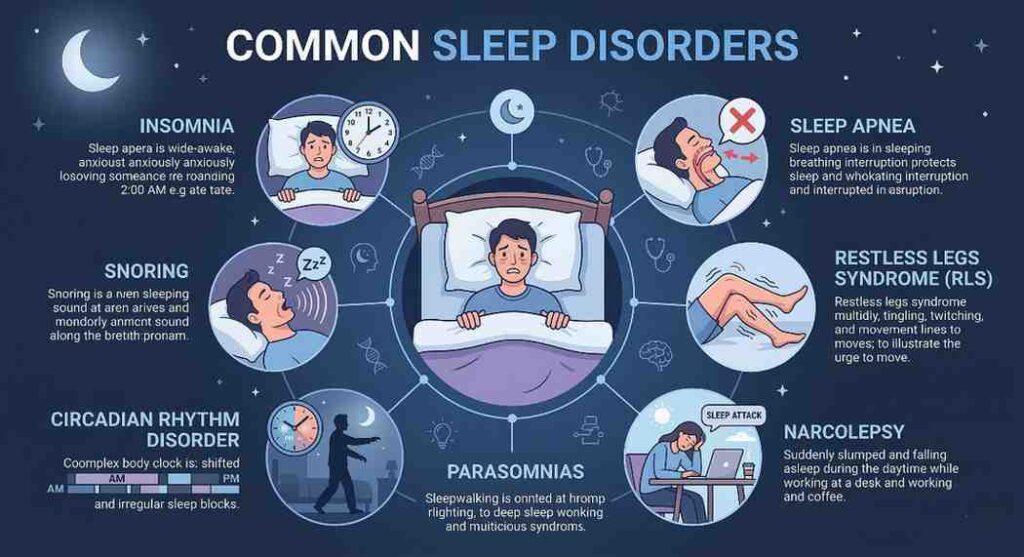
Sleep disorders are health problems that impact the quality of sleep, timing of sleep, and amount of sleep. An individual may experience various sleep disorders such as insomnia, sleep apnea, restless legs syndrome, and narcolepsy. Such disorders impact an individual’s ability to sleep and wake up feeling rested. If not treated, sleep disorders can affect an individual’s daily life by causing fatigue, lack of concentration, and other health problems.
- Insomnia – Difficulty falling asleep or staying asleep.
- Sleep Apnea – Breathing repeatedly stops and starts during sleep.
- Restless Legs Syndrome (RLS) – Uncomfortable sensations in the legs causing an urge to move them while resting.
- Narcolepsy – A condition that causes sudden and uncontrollable sleep attacks during the day.
- Parasomnias – Abnormal behaviors during sleep such as sleepwalking, sleep talking, or night terrors.
- Circadian Rhythm Disorders – Problems with the body’s internal clock that affect the sleep–wake cycle.
- Snoring – Loud breathing during sleep that can sometimes indicate other sleep disorders like sleep apnea.
Causes of Poor Sleep
Poor sleep can occur due to many factors related to lifestyle, environment, or health conditions. Stress, irregular sleep schedules, excessive screen time, caffeine intake, and unhealthy habits can interfere with the body’s natural sleep cycle. Identifying and addressing these causes can help improve sleep quality.
Some Causes of Poor Sleep
- Stress and anxiety
- Excessive screen time before bed
- Caffeine or heavy meals at night
- Irregular sleep schedules
- Noisy or uncomfortable sleep environment
Signs and Symptoms of Sleep Problems
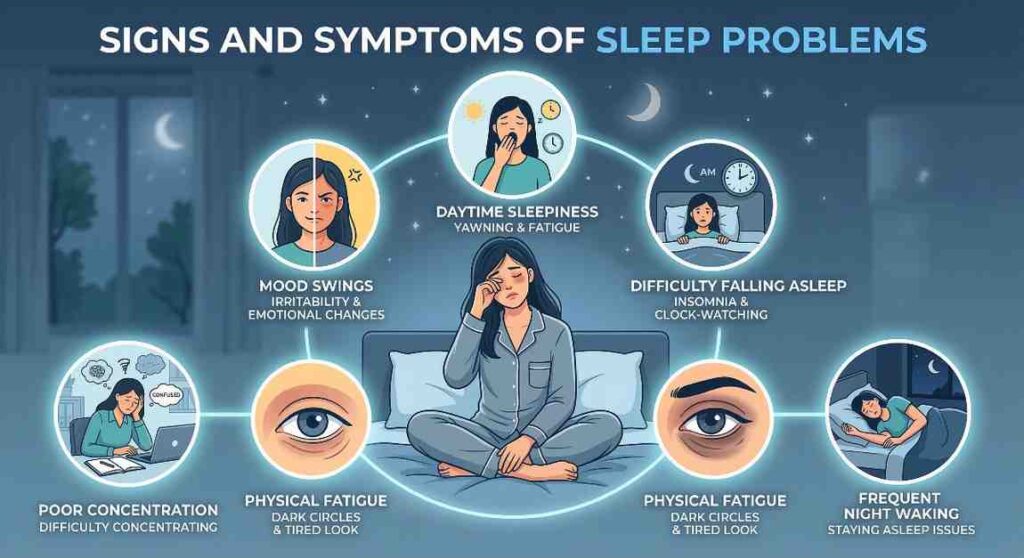
Sleep problems can impact both physical and mental well-being. The body is likely to exhibit warning signs whenever it does not get enough sleep. These signs may be exhibited during the night or even during the course of the day. A person experiencing sleep problems may find it hard to fall asleep, wake up during the night, or even feel fatigued after sleeping for the whole night. In the long run, sleep problems can impact concentration and mood. These signs are essential for helping individuals improve their sleep habits.
Sleep Hygiene: The Key to Better Sleep
Sleep hygiene is considered to be healthy habits and practices that are adopted to enhance and improve the quality of sleep. Sleep hygiene is considered to be healthy practices and habits that are adopted to enhance and improve sleep quality. By adopting healthy sleep hygiene practices and habits, it is possible to maintain healthy sleep patterns and schedules. It is considered a healthy practice and habit, and it is being followed with the aim of improving and enhancing the quality of sleep. Healthy sleep hygiene practices and healthy habits can help in maintaining healthy patterns and schedules of sleep. Healthy sleep hygiene practices and healthy habits can help in maintaining healthy patterns and schedules of sleep.
Some Tips Used For Better Sleep
- Maintain a consistent sleep schedule
- Keep the bedroom quiet and dark
- Avoid screens before bedtime
- Limit caffeine in the evening
- Create a relaxing bedtime routine
Lifestyle Habits That Improve Sleep
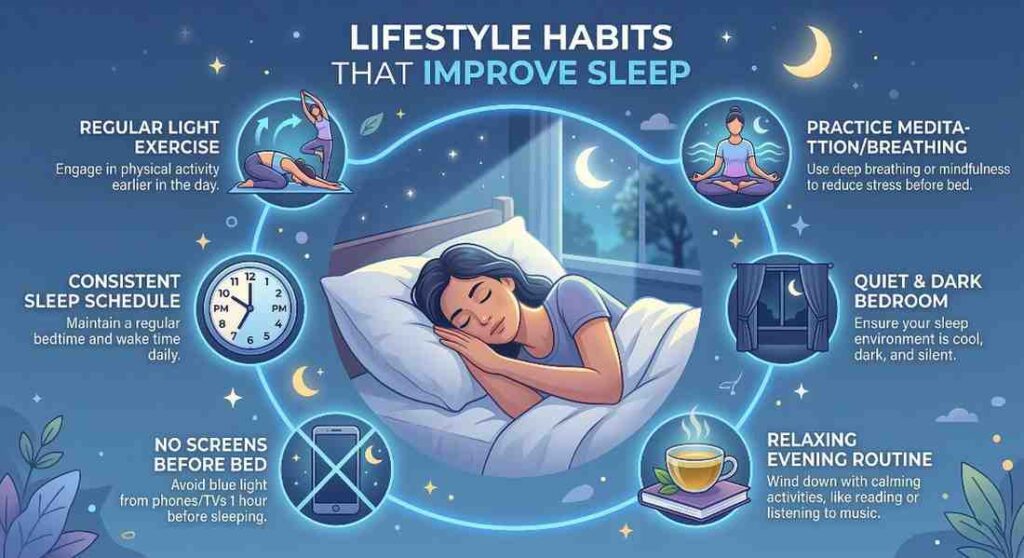
Healthy lifestyle practices have been found to play an important role in improving sleep quality. Physical activities help relax the body to improve sleep quality. Maintaining a daily routine of going to bed and waking up at the same time every day is also important. It helps to regulate the internal clock of the body. Stress is relieved through various relaxation practices such as meditation, deep breathing exercises, or stretching. It has also been found that avoiding caffeinated products or reducing screen time before going to bed helps to prepare the body to sleep. If good sleep is to be obtained, it is essential to adopt good lifestyle practices.
Foods That Help You Sleep Better
There are some foods that can help improve sleep quality naturally by promoting the production of sleep hormones such as melatonin and serotonin. Adding these foods to your daily meals can help the body relax and sleep better. Foods rich in magnesium, tryptophan, and other nutrients can help calm the nervous system, thus improving sleep quality. Eating light meals in the evening instead of heavy or spicy foods can help improve sleep quality.
Some Food Items Help You To Sleep Better
- Bananas – Rich in magnesium and potassium that help relax muscles
- Almonds and walnuts – Contain magnesium that supports better sleep
- Warm milk – Helps promote relaxation before bedtime
- Oats – Contain melatonin that helps regulate sleep cycles
- Cherries – Natural source of melatonin
- Herbal teas – Such as chamomile tea that helps calm the body
Exercises That Improve Sleep Quality
Exercise is one of the activities that can greatly help in improving sleep quality. Exercise can help reduce stress and relax the body, which can make it easier to fall asleep and stay asleep. Exercise can be in the form of walking, yoga, stretching, and other physical activities that can relax the mind and help you fall asleep. Exercise can also help regulate the body’s internal clock and can improve sleep patterns. Although it is recommended to avoid heavy physical activities before bedtime, as it can interfere with sleep, regular exercise can help you fall into deep and refreshing sleep. Some of the key benefits of regular exercise are relaxation, improved sleep quality, reduced stress, regulated sleep patterns, and improved well-being.
Impact of Technology and Screen Time on Sleep
Technology is a part of our lives, but overuse of electronic devices, especially before going to bed, can affect our sleep in a negative way. Electronic devices include things like smartphones, tablets, laptops, and TVs. These electronic devices give off a kind of light called blue light. It affects the melatonin level in our bodies. Melatonin is a hormone that regulates our sleep. When the level of melatonin is low in our body, it is difficult to fall asleep. In addition to that, if we use electronic devices late at night, it is difficult to calm our brains and fall asleep. This may impact our normal sleep patterns and create bad sleeping habits.
Causes
- Blue light exposure from phones, tablets, and computers
- Late-night social media or internet use
- Watching TV or gaming before bedtime
- Notifications and messages that interrupt sleep
- Keeping electronic devices near the bed
Sleep and Mental Health
There is a close relationship between sleep and mental health because proper sleep is essential for proper brain functioning and emotional stability. During sleep, mental energy is replenished, and emotions are processed in order to help in concentration and mental clarity. When one is not well-rested, it may lead to more stress and anxiety levels, making it difficult to cope with life’s demands. It may also impact one’s emotional stability and may result in irritability and mood swings. Lack of proper sleep may exacerbate mental conditions such as depression in the future. Therefore, it is essential to have healthy sleep habits since they help reduce stress and promote emotional stability and psychological well-being.
Sleep and Chronic Diseases
It has been noted that if one does not sleep enough, they might develop various diseases. For example, it has been noted that if one does not sleep enough, they might develop heart disease, diabetes, obesity, and high blood pressure, among other diseases. It has to be noted that having good sleep habits might prevent one from acquiring such diseases.
Diseases Occurred:
- Increases the risk of heart disease
- Can lead to high blood pressure
- Raises the risk of diabetes
- Contributes to weight gain and obesity
- Affects the immune system and overall health
Sleep Tips for Different Age Groups
Sleep requirements vary throughout life, and it is important to develop healthy sleeping habits in all stages of life. Different stages of life require a varying amount of sleep and a specific pattern to ensure healthy sleeping patterns.
Infants (0–1 year)
Infants require the most sleep because their bodies and brains are developing rapidly. Newborns typically sleep 14–17 hours a day, often in shorter periods throughout the day and night. Creating a calm sleep environment and maintaining consistent bedtime routines helps babies develop healthy sleep patterns.
Tips
- Maintain a consistent sleep routine
- Keep the sleep environment quiet and comfortable
- Place infants on their back while sleeping
- Avoid overstimulation before bedtime
Children (1–12 years)
Children need adequate sleep to support physical growth, learning, and brain development. Most children require 9–12 hours of sleep each night. Establishing a regular bedtime schedule and limiting screen time before bed helps improve sleep quality.
Tips
- Maintain a fixed bedtime and wake-up time
- Encourage relaxing bedtime routines such as reading
- Limit screen exposure before sleep
- Ensure a comfortable and dark sleeping environment
Teenagers (13–18 years)
Teenagers often experience changes in their biological sleep clock, which can make them stay awake later at night. However, they still require 8–10 hours of sleep for proper brain function and emotional health. Poor sleep in teenagers can affect academic performance, mood, and concentration.
Tips
- Maintain a consistent sleep schedule
- Avoid excessive screen time at night
- Limit caffeine intake
- Practice relaxation techniques before bed
Adults (18–64 years)
Adults typically need 7–9 hours of sleep to maintain good health and productivity. Busy lifestyles, stress, and irregular routines can disrupt sleep patterns. Developing healthy sleep habits and maintaining a balanced lifestyle helps improve sleep quality.
Tips
- Follow a consistent sleep schedule
- Exercise regularly during the day
- Avoid heavy meals and caffeine before bedtime
- Create a calm and comfortable sleep environment
Older Adults (65+ years)
Older adults may experience lighter sleep and wake up more frequently during the night. Although sleep patterns may change, they still need about 7–8 hours of sleep per night. Maintaining healthy routines and staying physically active can help improve sleep quality.
Tips
- Maintain regular sleep and wake times
- Engage in light physical activity during the day
- Reduce daytime naps
- Create a relaxing bedtime routine
Overall, maintaining healthy sleep habits at every stage of life is essential for physical health, mental well-being, and daily performance. Proper sleep helps improve memory, boost immunity, and support overall quality of life.
When Should You See a Doctor for Sleep Problems?
While it is normal for people to experience occasional difficulties in sleeping, it is always recommended that if such difficulties last for a while, it is crucial to seek medical attention. For instance, if one is having difficulties falling asleep or staying asleep and continues to wake up with fatigue despite having slept for a considerable period of time, it is crucial to seek medical attention since it may be a symptom of an underlying disorder. For example, if one is experiencing loud snoring, breathing pauses during sleep, excessive daytime sleepiness, frequent nightmares, and constant fatigue, it is crucial not to ignore such symptoms since they may be associated with disorders such as insomnia and sleep apnea.
Diagnosis and Treatment of Sleep Disorders
To diagnose sleep disorders, it is essential to examine sleep patterns, medical history, and lifestyle. Doctors may advise patients to undergo sleep studies or monitoring tests to observe and understand sleep behaviors and identify disorders such as insomnia or sleep apnea. There are various treatments available to cure sleep disorders. Treatment may include lifestyle changes, sleep hygiene habits, medications, and therapy. This helps improve sleep quality and health.
Natural Remedies for Better Sleep
Natural remedies are also useful in helping improve sleep by soothing the mind and preparing the body for sleep. Meditating, deep breathing, and doing yoga before retiring to bed can help improve sleep. Creating a sleep schedule and providing a conducive sleep environment are also important in helping the body comply with a healthy sleep cycle.
- Practice meditation or deep breathing
- Drink herbal teas like chamomile
- Maintain a consistent sleep schedule
- Keep the bedroom quiet and comfortable
- Avoid screens before bedtime
Myths and Facts About Sleep
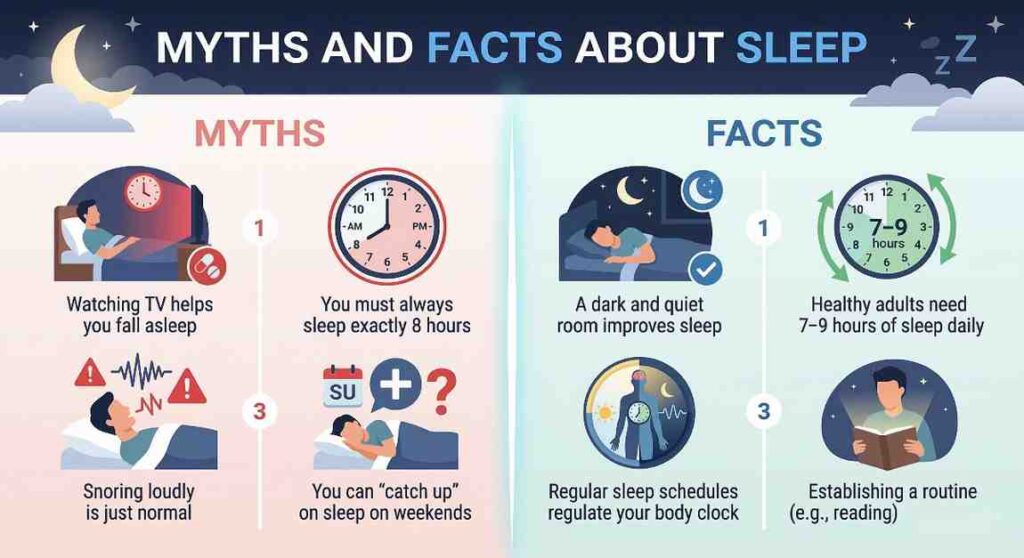
There are many common beliefs about sleep, but not all of them are true. Understanding the difference between myths and facts can help people develop healthier sleep habits and improve overall sleep quality.
Myth: Everyone needs exactly 8 hours of sleep
Fact: Sleep needs vary from person to person, though most adults need about 7–9 hours.
Myth: Watching TV helps you fall asleep
Fact: Screen light can interfere with melatonin production and disturb sleep.
Myth: You can catch up on sleep during weekends
Fact: Irregular sleep patterns can disrupt the body’s natural sleep cycle.
Myth: Snoring is harmless
Fact: Loud or frequent snoring may be a sign of sleep apnea.
Myth: Lying in bed longer will help you sleep
Fact: If you can’t sleep, it’s better to get up and relax before trying again.
How to Reset Your Sleep Cycle
Resetting your sleep cycle requires consistent habits and a healthy routine. The body follows an internal clock called the circadian rhythm, which controls when you feel sleepy and awake. To reset this cycle, it is important to go to bed and wake up at the same time every day. Exposure to natural sunlight during the morning and limiting screen time at night can also help regulate the body’s sleep schedule. Creating a relaxing bedtime routine and avoiding caffeine or heavy meals before bed can gradually restore a healthy sleep pattern.
Sleep Tracking Apps & Tools
There are different apps available for monitoring sleep patterns and obtaining insights about sleep. Apps and tools are used for monitoring different aspects of sleep, such as sleep duration and interruptions during the night. There are different smartphones and devices available for analyzing sleep patterns and obtaining better sleep. By making use of such apps and tools regularly, people can gain better insights into their sleep patterns and make better lifestyle choices.
Examples
- Sleep Cycle
- Calm
- Fitbit Sleep Tracker
- Apple Health Sleep Tracking
- Samsung Health
Frequently Asked Questions
Sleep is important for the overall health of an individual. It helps the body repair tissues, build the immune system, and enhance brain and emotional functions. Lack of sleep over time can lead to many health problems.
An individual needs 7 to 9 hours of sleep each night. Children and teenagers need more sleep because their bodies and minds are still developing.
The most common signs of sleep disorders include difficulty falling asleep, frequent wakeups during the night, loud snoring, tiredness, poor concentration, and feeling tired after a full night’s sleep.
Yes, medical tests can help detect health issues or sleep disorders. At Medifyhome, you can find diagnostic tests and health checkups for sleep disorders.
You can improve the quality of your sleep naturally by maintaining a routine, avoiding screens before going to bed, exercising, and ensuring a healthy sleep environment.
You can opt for health checkups for sleep disorders if you are facing sleep disorders for several weeks or if you are feeling extremely tired, facing breathing issues while sleeping, or feeling sleepy during the day.
Yes, lifestyle and health conditions can affect sleep quality. You can improve sleep quality by avoiding stressful situations, eating healthy, exercising, and getting timely health checkups and diagnostic tests from Medifyhome.
Conclusion:
Sleep is an essential aspect of maintaining physical and mental health. Sleeping enough can help improve brain function, build up the immune system, regulate hormones, and improve heart health. On the other hand, unhealthy sleep habits can cause fatigue, decreased concentration, and other health issues. By developing healthy sleep habits, coping with stress, limiting screen time, and following healthy lifestyle practices, people can improve their sleep quality considerably. It is also important to keep an eye on health to detect any underlying health issues, if any, that may affect sleep. By availing the diagnostic services of Medifyhome, people can keep their health under check and take the necessary steps to improve their sleep quality.