Book an Appointment
CT Intracranial Vessels
In order to evaluate the brain’s circulatory system, CT imaging is necessary. It offers important data for identifying a range of neurological disorders, guiding medical care, and organizing surgical procedures.
On the surface of the brain, the pial vessels are intracranial vessels found in the cells called glia limitans (the outermost layer of the cortex made up of astrocytic end-feet) or pia–arachnoid (also called the leptomeninges). Available 24/7 customer support and uses the best equipment. Medifyhome has partnered with pathology labs and diagnostic centers that are certified with both NABL and NABH, providing a variety of pathology and radiology tests at reasonable costs. To book an appointment for CT Intracranial vessels, go through Medifyhome or call us at +919100907036, +919100907622.
What are CT Intracranial Vessels?
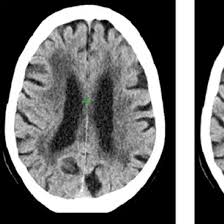
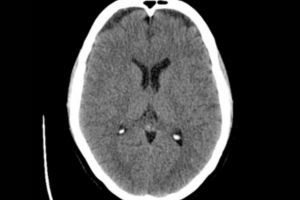
A CT scan of the intracranial vessels, sometimes also known as a CT angiography (CTA), is a non-invasive imaging technique that produces detailed pictures of the brain and neck blood vessels using a CT scan with a contrast material. A CTA can help diagnose and evaluate conditions such as Aneurysms, blockages, blood clots, injury and tumors. Usually, CTA is carried out in an outpatient imaging facility or radiology clinic.
How does the procedure work?
CT scanning and standard X-ray imaging have numerous similarities. A single x-ray beam source transmits x-rays through the body during traditional x-ray imaging. The X-rays that leave the body are captured by an identification panel. The image will appear in various shades of gray, depending on how much of the X-rays are blocked by the body organs. For example, air appears relatively black on X-rays, whereas bones appear white. Several x-ray beam sources and sets of x-ray detectors rotate quickly around the body during a CT scan. Multiple small, high-energy x-ray beams are sent through the body by the x-ray beam sources. The x-rays that leave the body are picked up by the sensors.
You will lie on a table that moves through the CT scanner during the examination so that the x-ray beams can look at various body parts. Images of the body will then be created by a quick computer using the data collected from the scanner. The computer generates two or three-dimensional images of the body by processing a lot of CT scan data. To find disorders in the body, radiologists will use advanced computer programs and outstanding monitors to examine these images.
During the scan, contrast material is injected to make the blood vessels under examination stand out on the pictures.
Benefits of CT Intracranial Vessels
1.It may render operation unnecessary. Surgery can be carried out with greater accuracy if it is still required.
2. Comparing CT angiography to traditional angiography, the former is quick, non-invasive, and may have fewer side effects.
3. Compared to other angiography tests like magnetic resonance imaging (MRI) and traditional needle angiography, CT angiography might offer more accurate anatomical details.
4. General sedation or anesthesia is not required for CT angiography.
5. Heart CT angiography helps in the identification of blocked coronary arteries.
6. Additionally, CT angiography might be less expensive than catheter angiography.
7. After a CT scan, a patient’s body is completely free of radiation.
CT scans and X-rays shouldn’t have any adverse effects right away.
limitations
1. ionizing radiation exposure.
2. Those who already have kidney problems are at risk for contrast-induced nephropathy.
3. Image quality could be impacted by artifacts.
Risks of CT Intracranial Vessels
1. The risk of developing cancer from excessive radiation exposure is always small. However, the advantages of an accurate diagnosis greatly exceed the dangers associated with CT evaluation.
- If you have a history of x-ray contrast material allergies, your doctor can suggest that you take a steroid or other particular preventative medication for a few hours or the day before the CT angiography to reduce the risk of an allergic reaction. Opting for an alternative examination that does not require iodinated contrast material is an additional choice.
- When iodinated contrast material is administered to individuals who already have poor renal function and are at risk for kidney failure, it can worsen kidney function. Consult your referring physician and radiologist for further details.
- It can harm the skin, blood vessels, and nerves if a significant amount of x-ray contrast material overflows from the veins being injected and spreads below the skin where the IV is inserted. The nurse or technologist should be notified right away if you experience any discomfort or sensation in this area during or right after the contrast substance injection.
- If a woman suspects pregnancy, she should always disclose this information to her physician and the x-ray or CT specialist.
- Test Type: CT Intracranial Vessels
- Preparation:
- Wear a loose-fitting cloth
- You may need to fast for 4–6 hours before the scan
- Carry Your ID Proof
- Prescription is mandatory for patients with a doctor’s sign, stamp, with DMC/HMC number; as per PC-PNDT Act
- Reports Time: With in 4-6 hours
- Test Price: Rs.6000
How to book an appointment for CT Intracranial vessels?
To book an appointment for CT Intracranial vessels, go through Medifyhome or call us at +919100907036, +919100907622.
What are CT Intracranial Vessels?
A CT scan of the intracranial vessels, sometimes also known as a CT angiography (CTA), is a non-invasive imaging technique that produces detailed pictures of the brain and neck blood vessels using a CT scan with a contrast material.
What happens after the CT scan?
Usually, patients are observed for a brief time to make sure the contrast is not causing any negative effects. The referring physician is informed once a radiologist reviews the results.
What preparation is required before CT Angiography?
Patients should let the medical staff know about any allergies, especially to contrast material, and may need to fast for a few hours before the operation.
How long does CT Angiography take?
It usually takes 30 to 60 minutes to complete the scan.
Can CT Angiography detect blockage?
A CT Angiography is mainly done to check blocked arteries in the heart.
Most Booked Ct Scan Parts
With Medifyhome, book a CT scan get the fastest appointment scheduling at NABH & ICMR Certified diagnostic centers near you. Trusted reports, expert radiologists, and seamless service-only a click away!
Why Choose Medifyhome for CT Intracranial Vessels?
Medifyhome has partnered with pathology labs and diagnostic centers that are certified by both NABL and NABH, providing a variety of pathology and radiology tests at reasonable costs. Uses the best equipment and offers support to clients 24/7. Our staff have extensive training and qualifications. We provide the greatest services, including home-based care, ambulance services, and diagnostics. Medifyhome offers MRI scans, CT scans, and ECGs, and their MRI scans are reasonably priced. Contact Medifyhome to schedule an appointment for CT Intracranial vessels, or give us a call at +919100907036, +919100907622.