
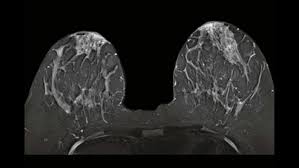
MRI For Breast
Book your MRI For Breast at Medifyhome, where we offer top-quality scans at the best prices. Our NABL & NABH accredited diagnostic centers ensure accurate and reliable results.




Book an Appointment
MRI For Breast
Medifyhome has collaborated with the best pathology laboratories that are NABL and NABH certified and follow ISO safety guidelines to provide the best MRI For Breast at an affordable price for needy individuals. MRI of the breast is an advanced imaging technique with very high resolution, enabling one to see detailed images of breast tissue. Unlike mammography or ultrasound, which are more conventional methods using X-rays or sound waves, MRI makes use of strong magnetic fields and radiofrequency waves to generate detailed cross-sectional images of the breast. Breast MRI may offer better information for women whose dense breast tissue can make mammograms less sensitive to the detection of tumors. Breast MRI can also be used to assess abnormalities that are found on other imaging tests or to guide biopsies, or to monitor the success of treatments such as chemotherapy. It is not usually used in routine screening of the general population because it is very expensive, not readily available, and has a risk of false positives. It is typically used when further information is needed than other imaging techniques can provide. Women with a higher risk of developing breast cancer due to genetic reasons, such as BRCA1 or BRCA2 mutations or strong family history of the disease. MRI is used after a diagnosis of breast cancer to assess the extent of the disease, especially if the size or location of the tumor cannot be properly determined using other imaging techniques.
To schedule an appointment for a MRI For Breast, simply contact Medifyhome or call our customer care at +919100907036 or +919100907622 for more details and queries.
Overview
Specification
FAQ
Overview
What is Breast MRI?
Breast MRI is a diagnostic imaging technique that makes use of magnetic fields and radio waves to create detailed images of the breast tissue with high resolution. Unlike mammography, which uses X-rays, and ultrasound, which uses sound waves, MRI does not make use of radiation. It has excellent sensitivity in assessing dense breast tissue or finding certain types of breast abnormalities, including breast cancer. Breast MRI has the capability to show even the smallest details of the soft tissues (such as glandular tissue of the breast, fat, and lymph nodes) and the blood vessels responsible for supplying the breasts. It usually is used in conjunction with other imaging techniques, such as mammography and ultrasound, when these technologies are unable to give specific information or more detailed assessment. Breast MRI is a strong, diagnostic imaging tool that makes it easy to visualize an internal structure in the breast by women at high risk or those with dense breast tissues. In fact, such images help doctors identify, diagnose, and monitor breast abnormalities as well as breast cancer much better than some other imaging methods.
Why is MRI for the Breast Performed?
High Sensitive imaging to check the tissues in breast for various problems or issues. It particularly supports in the early detection diagnosis of monitoring breast cancer. Main reasons for recommending the patient with Breast MRI follow
- Screening to a high risk of cases
Breast MRI as screening technique in women in at higher risk of Breast cancer. Such high risks patients can be included –
Women with a family history of breast cancer (especially close relatives, like mothers, sisters, or daughters).
Women who carry genetic mutations associated with an increased risk, such as BRCA1 or BRCA2.
Women who have previously been diagnosed with breast cancer in one breast and are at higher risk of developing cancer in the other breast.
- Diagnosing Abnormalities
Breast MRI can be helpful in further investigation when an abnormality is detected by a mammogram or ultrasound, or when a patient presents with symptoms such as a lump, pain, or nipple discharge. MRI can:
Detect smaller or hidden tumors that may not be visible on mammograms, especially in women with dense breast tissue.
Give a more detailed view of any abnormal findings, thus making it easier to diagnose.
- Staging and Determining the Spread of Breast Cancer
When breast cancer is diagnosed, the extent or spread of the disease can be determined using Breast MRI. It is most useful in determining:
Size and location of the tumors: MRI captures images that are detailed, both for soft tissues and blood vessels, enabling physicians to estimate the size and precise location of the tumors(s) more accurately than other methods of imaging.
Detection of multi-centric or multi-focal cancers: MRI can identify more than one tumor in the same breast or in both breasts, which cannot be detected by other methods.
Assessment of spread (metastasis): MRI is useful in determining if the cancer has spread to the surrounding tissues, like lymph nodes, or to distant parts of the breast. This information is essential for determining the treatment options.
- Monitoring Treatment Response
For women diagnosed with breast cancer, MRI is an essential monitoring tool during treatment
Evaluates treatment effectiveness: MRI scans help assess the tumor’s response to chemotherapy, radiation, or other forms of treatment.
Detecting residual or recurrent tumors: Following the completion of breast cancer treatment, MRI detects residual or recurrent cancer cells within the breast tissue. Early detection leads to intervention.
- Evaluation of Breast Implants
MRI is commonly utilized to assess the status of breast implants in terms of:
Implant Rupture: MRI is the most sensitive test for detecting a ruptured implant, especially when saline implants have flattened or silicone implants have leaked.
Capsular contracture is also detectable on MRI, where inflammation or any scar tissue encases an implant, causing the breast to set up in a hard configuration and possibly distorting the shape of the breast.
How Does Breast MRI Work?
Breast MRI (Magnetic Resonance Imaging) is a non-invasive diagnostic tool that uses strong magnetic fields, radio waves, and a computer to generate detailed images of the breast tissue. Here’s a step-by-step overview of how Breast MRI works:
- Magnetic Field and Radio Waves
The MRI machine employs a powerful magnetic field to align hydrogen protons in the body, primarily those located in the water molecules that are part of the bulk tissue in your body. This is how it works:
Magnetic Field: The MRI scanner has a strong magnet that produces a very strong magnetic field. This field aligns the hydrogen protons in the body, which are abundant in the soft tissues of the breast (such as fat, glandular tissue, and blood vessels).
- Creating the Image
Signal Detection: The signals are detected by the MRI scanner from the protons returning to their normal state. Signals vary according to the types of tissues from which they come. Fat tissue emits a different signal than glandular tissue, for instance, which makes a difference in the differentiation between types of tissues in the breast.
Computer Processing: The signals are sent to a computer that processes the data to create cross-sectional images of the breast tissue. These images are high-resolution and can be viewed in 2D or 3D, providing detailed insights into the structure of the breast.
- Steps of Breast MRI Procedure
The actual MRI procedure is usually as follows:
Preparation: Before the MRI, you will be asked to change into a gown and remove any jewelry or clothing with metal, as metal can interfere with the magnetic field. You may also be asked to remove any deodorants or creams that could affect the images.
Positioning: For a breast MRI, you’ll typically lie face down on the MRI table. The breast tissue will be positioned into special openings in the table to allow clear access for imaging. In some cases, the breasts may be compressed (though not as much as during a mammogram) to ensure the best images are captured.
Scan Time: Generally, the test will take you between 20 to 45 minutes. For this length of time, you would be asked to hold stock-still to get distinct and precise images.
Exiting: You may resume your ordinary activities following the scan. If you were administered with contrast media, you will be required to drink enough water to enhance the excretion of such from your body.
- Breast MRI Images
The images produced by a breast MRI are very detailed and can show the following:
Tumors or Growths: MRI can detect small tumors, often even those that are too small to be seen on a mammogram or ultrasound.
Breast Tissue Density: MRI provides a clearer view of dense breast tissue, which can make it difficult for other imaging methods to identify abnormalities.
Extent of Cancer: If cancer is found, MRI aids doctors in determining the size, location, and extent of the tumor(s) in the breast, including determining if the cancer has spread to nearby lymph nodes or other areas.
Conditions Detected by Breast MRI
Breast MRI is a very sensitive imaging tool that can detect a wide range of abnormalities in the breast. It is very effective in detecting conditions that may not be visible with other imaging methods, such as mammography or ultrasound. The following are the key conditions that can be detected by Breast MRI:
- Breast Cancer
Breast MRI is widely used in the detection and diagnosis of breast cancer, especially for women who are at higher risk or have dense breast tissue. It can:
Detect Tumors: MRI is highly sensitive and can identify small tumors that may not be visible on mammograms, particularly in dense breast tissue.
Evaluate Tumor Size and Spread: MRI provides detailed images that help determine the size, extent, and location of the tumor within the breast, as well as assess whether cancer has spread to surrounding tissues or lymph nodes.
- Benign Breast Conditions
Breast MRI is also effective at detecting benign (non-cancerous) breast conditions, which may include:
Fibroadenomas: These are relatively common, benign tumors comprising glandular and fibrous tissues. MRI can help differentiate fibroadenomas from malignancies.
Cysts: These are fluid-filled sacs within the breast that are usually benign. MRI may be helpful in distinguishing between simple cysts and more complex cysts that need further evaluation.
- Breast Implant Problems
MRI is the gold standard for assessing the status of breast implants, especially for silicone implants. It may be able to detect
Implant Rupture: MRI is the best imaging modality for detecting rupture of silicone breast implants. Silicone leaks are not easy to visualize on mammography, but MRI can determine whether the implant is intact or whether the silicone has leaked into the surrounding tissue.
Capsular Contracture: It is a condition where scar tissue forms around the implant, which causes the breast to feel firm or even deformed. MRI can detect changes in the appearance of the implant and help diagnose this condition.
- Breast Infections (Mastitis) and Abscesses
Mastitis: This is an infection involving the breast tissue, a common condition of breastfeeding. Infection extent and associated with abscesses (liquid collections of pus) should be identified through MRI scanning.
Abscesses : Fluid collections resulting from this infection. It provides imaging details to assist in establishing the need for drainage as well as determining the decision for further treatment.
- Breast Inflammation
MRI can identify areas of inflammation in the breast tissue, which could be caused by a variety of things, including:
Inflammatory Breast Cancer (IBC): A rare and aggressive type of breast cancer that presents with inflammation, redness, and swelling. MRI may help to define the extent of the disease that cannot be visualized by mammography.
Fat Necrosis: This condition occurs due to the injury of fat tissue within the breast, typically by trauma or previous surgery. MRI may detect the existence of areas of fat necrosis that may look similar to cancer but are mostly benign.
Benefits of Breast MRI
Mammary MRI or magnetic resonance imaging is a rather useful tool in the search and diagnosis of breast abnormalities or cancer. The benefits below detail why Breast MRI could indeed be a helpful process. These include the following:
- High Sensitivity to Identify Breast Cancer
Of the best benefits of Breast MRI is high sensitivity in the case of identification of breast cancer; some patients are identified via mammography when it is effective; there are also other, often at-risk, persons
Detecting smaller tumours: MRI is many times more sensitive than mammography, and that goes specially for women with dense breast tissues where even smaller or even a subtle tumor may miss by mammography, thereby leading to detecting the cancer earlier.
Detecting cancer in both breasts: MRI can help detect cancer in the opposite breast, which is especially important for women who have been diagnosed with breast cancer in one breast, as they are at a higher risk of developing cancer in the other.
- No Radiation Exposure
Unlike mammography, which involves X-rays and exposure to ionizing radiation, Breast MRI generates images using magnetic fields and radio waves, thereby a radiation-free procedure. This is particularly beneficial for:
Young women: MRI is ideal for younger women who are at higher risk for breast cancer but need to avoid radiation exposure, as they have a lifetime of potential screenings ahead.
- Better for Dense Breast Tissue
It becomes challenging to detect tumors by mammography in dense breasts as dense tissue and the tumors themselves appear white on an X-ray. In the dense breast, the use of breast MRI is more sensitive because:
Greater differentiation of the tissue: The MRI renders images that are sharper and even more detailed for distinguishing the dense glandular tissue and any abnormalities present.
- Greater Detailed Tumor Images
The images provided by breast MRI are of high resolution and three-dimensional, offering more information than those from mammograms or ultrasound. These images enable the healthcare provider to assess tumor size, shape, and location: MRI helps to determine the exact size and location of the tumor within the breast, which is crucial for treatment planning.
Evaluate the nature of a tumor: MRI can determine if a tumor is well-defined or irregular and helps doctors decide if the tumor is more likely to be benign or malignant.
- Monitoring the Response to Therapy
Breast MRI is useful for patients who have been diagnosed with breast cancer and are under treatment. It is useful for determining how well the cancer is responding to therapy.
Post-surgery follow up: MRI can detect any residue tumor or new growth after surgery, such as in the case of a lumpectomy or mastectomy.
Chemotherapy response monitoring: MRI helps determine the effectiveness of chemotherapy in reducing the size and appearance of the tumor.
Specification
- Test Type: MRI For Breast
- Preparation:
- Wear a loose-fitting cloth
- Fasting not required
- Carry Your ID Proof
- Prescription is mandatory for patients with a doctor’s sign, stamp, with DMC/HMC number; as per PC-PNDT Act
- Reports Time: With in 4-6 hours
- Test Price: Rs.6000
FAQ
How can I book an appointment for a MRI For Breast through Medifyhome?
To schedule an appointment for a MRI For Breast, simply contact Medifyhome or call our customer care at +919100907036 or +919100907622 for more details and queries.
What is a Breast MRI?
A Breast MRI (Magnetic Resonance Imaging) is a diagnostic test using powerful magnets and radio waves to create detailed images of the breast tissue. It offers a non-invasive, radiation-free alternative to mammography and ultrasound, which proves particularly useful in detecting breast cancer, dense tissue, and other breast conditions.
Why get a Breast MRI?
There are several reasons why a breast MRI may be recommended:
- Detection of breast cancer: Especially in women with dense breast tissue or those at high risk (e.g., BRCA gene mutations, family history of breast cancer).
- Evaluation of breast cancer: to assess the extent and location of tumors, monitor the response to treatment, or detect recurrence.
- Screening for: High-risk patients who are likely to require more sensitive screening tools beyond mammography
- Evaluation of implant integrity: To check for ruptured implants or capsular contracture.
- Evaluating other conditions: For example, abscesses, infections, or fat necrosis.
Who needs a Breast MRI?
A Breast MRI is usually recommended for:
- High-risk patients: Women with BRCA1 or BRCA2 gene mutations or with a strong family history of breast cancer.
- Women with dense breasts: Those having dense breast tissue will benefit more from MRI since it has greater sensitivity in the same instances.
- Women with a history of breast cancer: To screen for recurrence or residual disease.
- Women with breast implants: To evaluate for potential rupture or complications of an implant.
Is a Breast MRI more sensitive than a mammogram?
Breast MRI has several advantages over mammography, especially in certain settings:
- More sensitive in dense breasts: MRI is better able to detect cancer in the setting of dense breast tissue in which mammograms are more likely to miss tumors.
- Detects smaller or even hidden tumors: MRI is more sensitive in detecting small or hidden tumors, especially in women with dense tissue or those who are at high risk.
- No radiation: MRI does not use ionizing radiation, unlike mammography, making it a safer option for high-risk patients who need frequent screenings.
- However, mammography will always be the standard to follow in routine breast cancer screening of women over 40 due to its effectiveness in recognizing bigger tumors and changes within breast tissue. In most instances, MRI is used with, not instead of, mammography.
How does a Breast MRI Work?
A Breast MRI scans detailed images of the breasts with the use of a strong magnetic field and radio waves. The process will entail:
- You will lie on a table with your breasts placed in special openings.
- A contrast dye may be injected into your bloodstream to highlight certain areas of the breast and help identify abnormalities.
- The MRI machine takes images from different angles, which are then processed into detailed, high-resolution images of the breast.
What should I do before a Breast MRI?
Before the procedure, you may be asked to:
- Remove metal objects: This includes jewelry, hairpins, and any clothing with metal fasteners, as metal can interfere with the MRI’s magnetic field.
- Change into a gown: You’ll typically be asked to wear a gown to ensure the MRI machine can clearly view the breast area.
- Tell your doctor about any medical conditions you have: especially kidney disease, since the contrast dye used in this procedure is filtered through the kidneys; and if you’re pregnant or breastfeeding.
Is this procedure painful?
No, Breast MRI is not painful. The procedure is non-invasive, though some women may feel slight discomfort from the positioning, especially if they have large breasts. The MRI machine is large and may seem confining, but most patients find the experience tolerable. If contrast is used, the injection may cause a brief, mild sensation, but this is not painful.
Why Choose Medifyhome for MRI For Breast?
Medifyhome is an online medical consultant that provides home-based medical services not only in your area but also in most cities in India, including Hyderabad, Chennai, Mumbai, Kolkata, and more. We have collaborated with diagnostic centers that have the best machines and equipment to ensure you get accurate results. Medifyhome provides 24-hour customer service for booking the appointment of the services and guides you with instructions. Medifyhome also provides the best diagnostic centers at low prices. Once you receive your test results, you can easily book an appointment with our network of experienced doctors for consultation. To schedule an appointment for a MRI For Breast, simply contact Medifyhome or call our customer care at +919100907036 or +919100907622 for more details and queries.