DVT Pump For Rent in Hyderabad
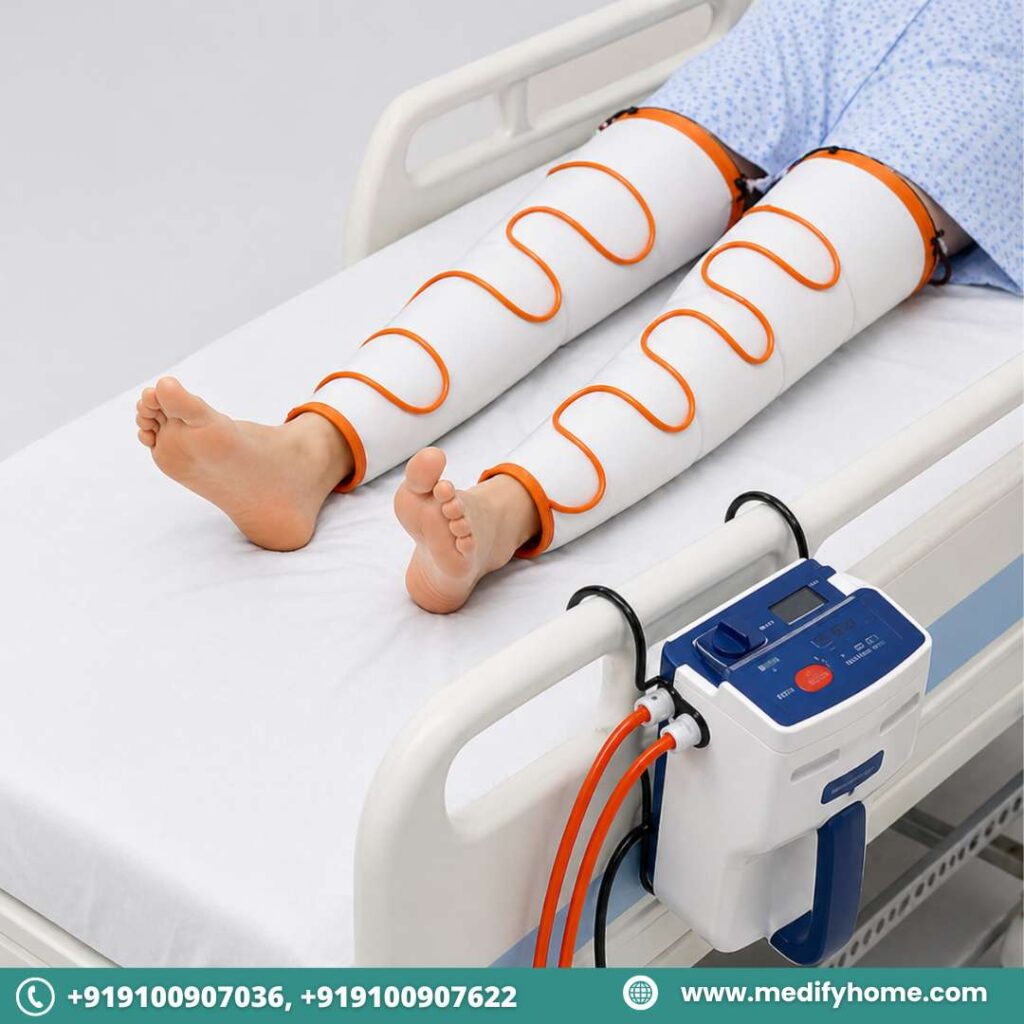
A DVT pump is an advanced medical device that uses continuous compression to slow blood flow in the legs and stimulate healthy blood circulation, effectively preventing dangerous blood clots in patients with limited mobility after surgery or prolonged bed rest. Physicians usually prescribe DVT pump treatment for patients recovering from orthopedic or heart surgery and other medical conditions that involve immobilization. If circulation is not checked, deadly blood clots can develop in the deep veins without showing any signs. That’s where Medifyhome steps in. These pumps can be rented from us in Hyderabad, offering you clinically maintained and professionally serviced compression therapy machines delivered straight to your doorstep. With our expert team handling everything from installation to instruction, you’ll experience safe, efficient treatment to prevent blood clots from day one.
Book an Appointment
What is a DVT pump?
A DVT (Deep Vein Thrombosis) pump is a motorized medical compression device that uses sequential atmospheric compression to gently apply controlled pressure to the legs, feet, or arms—simulating the natural muscle-pumping action that promotes healthy blood circulation and prevents dangerous blood clot formation in deep veins. The device works by inflating and deflating specially designed compression clothing wrapped around the patient’s limbs in a sequential, wave-like pattern, pushing standing blood upward toward the heart and maintaining healthy venous circulation throughout periods of limited mobility or complete bed rest. Doctors widely prescribe DVT pumps for patients recovering from orthopedic surgeries, cardiac procedures, stroke, and any medical condition requiring prolonged immobilization. Without adequate circulatory support, dangerous deep vein blood clots can silently develop—leading to life-threatening complications, including pulmonary embolisms.
Types of DVT Pump Available for Rent
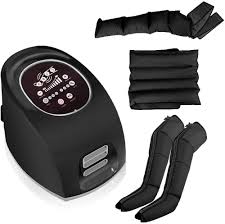
Single Chamber DVT Pump
Price: ₹24,000 – ₹35,000
Description: Provides uniform limb compression, improving blood circulation, reducing swelling, and preventing clot formation.
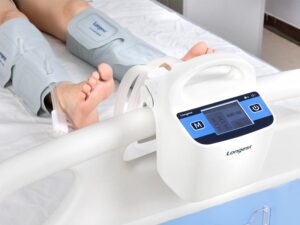
Multi-Chamber DVT Pump
Price: ₹35,000 – ₹65,000
Description: Multiple air chambers deliver sequential compression, enhancing venous return and reducing thrombosis risks.

Sequential Compression Device (SCD)
Price: ₹75,000 – ₹95,000
Description: Pulsatile sequential compression mimics muscle action, boosting circulation while preventing postoperative venous clotting.
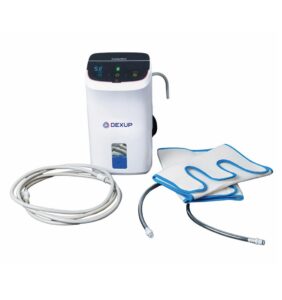
Portable DVT Pump
Price: ₹25,000 – ₹40,000
Description: Lightweight portable compression pump supports home therapy, travel use, comfort, and circulation improvement.
Cost of medical equipments
| Equipments | Price | Schedule |
|---|---|---|
|
Rs. 1800 |
||
|
Rs. 7500 |
||
|
Rs. 5000 |
||
|
Rs. 4500 |
||
|
Rs. 18000 |
||
|
C-Arm Machine |
Rs. 2–3 Lakhs/month |
|
|
Rs. 1000 |
||
|
Rs. 6500 |
||
|
Rs. 5500 |
||
|
Rs. 4000 |
||
|
Hematology Analyzer (CBC Machine) |
Rs. 35,000 |
|
|
Rs. 7000 |
||
|
Rs. 3500 |
||
|
Rs. 5500 |
||
|
Hospital Bed (5 Function/Electric) |
Rs. 10000 |
|
|
Rs. 4000 |
||
|
Rs. 700 |
||
|
Food Table (Overbed Table) |
Rs. 1500 |
|
|
Rs. 4200 |
||
|
Rs. 8500 |
||
|
Rs. 4500 |
||
|
Rs. 5500 |
||
|
Rs. 7000 |
||
|
Rs. 2500 |
||
|
Rs. 12000 |
||
|
Rs. 5500 |
||
|
Rs. 1300 |
||
|
Rs. 3500 |
||
|
Electric Wheelchair |
Rs. 8000 |
|
|
Patient Stretcher |
Rs. 3500 |
|
|
Recliner Wheelchair with Commode |
Rs. 4500 |
|
|
Recliner Wheelchair (Premium) |
Rs. 4000 |
Why is a DVT pump important?
A DVT pump plays an absolutely critical role in preventing life-threatening blood clot complications during post-surgical recovery and prolonged immobilization. For patients with limited mobility, consistent DVT device therapy can make a truly life-saving difference—protecting circulation, preventing clots, and ensuring safer recovery.
Prevents Dangerous Blood Clot Formation: Prolonged immobilization allows blood to pool and stagnate in deep veins creating dangerous clotting conditions. DVT pump therapy maintains continuous circulation, effectively preventing the silent development of life-threatening deep vein thrombosis during recovery.
Reduces Risk of Pulmonary Embolism: Untreated deep vein blood clots can break loose and travel to the lungs—causing a potentially fatal pulmonary embolism. Regular DVT pump therapy significantly reduces this serious risk by maintaining healthy venous blood flow throughout recovery.
Reduces Post-Surgical Swelling: Sequential compression therapy effectively reduces post-surgical swelling and fluid accumulation in the limbs, improving patient comfort, accelerating tissue healing, and preventing complications associated with prolonged limb swelling after surgery.
Improves Blood Circulation: DVT pump therapy actively stimulates healthy venous blood circulation throughout the limbs, preventing dangerous blood pooling, maintaining healthy oxygen delivery to tissues, and supporting faster, more comfortable post-surgical recovery.
Complements Anticoagulant Therapy: DVT pump therapy works effectively alongside prescribed anticoagulant medications, providing mechanical circulatory support that significantly enhances overall blood clot prevention for high-risk post-surgical and immobilized patients.
Supports Safe Home Recovery: DVT pump therapy allows high-risk patients to receive effective blood clot prevention safely at home—reducing the need for prolonged hospital stays and enabling more comfortable recovery within familiar surroundings.
How Does a DVT Pump Work?
A DVT Pump follows a precise, highly effective process to deliver sequential compression therapy and prevent dangerous blood clots. Here is a clear step-by-step breakdown of how it works:
Step 1: The machine is delivered and set up. Medifyhome delivers the DVT pump directly to your home in Hyderabad—our trained team assembles the equipment and configures all therapy settings according to the doctor’s prescription.
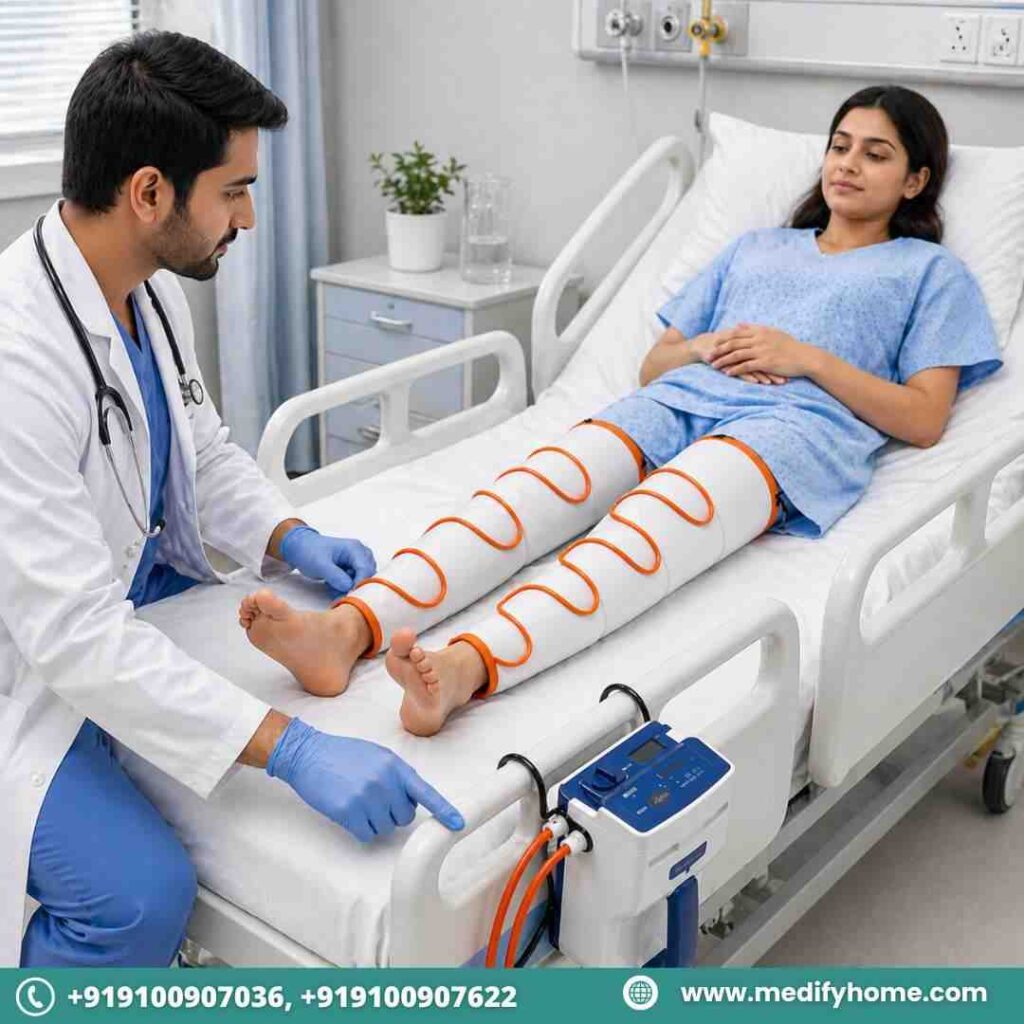
Step 2: Compression garments are applied. Specially designed compression sleeves or boots are comfortably wrapped around the patient’s legs, feet, or arms—depending on the doctor’s prescription and area requiring circulatory support.
Step 3: The therapy environment is set up. The level of compression pressure, the type of therapy, and the length of the session are precisely set using the digital control panel.
Step 4: The machine is switched on. Once settings are confirmed, the DVT pump begins its sequential pneumatic compression cycle—gently inflating and deflating compression garments in a controlled wave-like pattern around the patient’s limbs.
Step 5: Sequence of Compression Begins. Sequential inflation of compression stockings begins at the feet. It moves up through the legs to the thighs, mimicking the effects of muscular contraction to pump sluggish blood from the lower extremities back to the heart.
Step 6: Pressure is Released, and Repetition Occurs. Each cycle ends with the garments deflating entirely, enabling freshly oxygenated blood to enter the limbs before the next cycle starts.
Step 7: Pressure Levels are Monitored. The built-in pressure monitoring system continuously maintains safe compression levels and automatically alerts caregivers if pressure exceeds recommended limits during therapy.
Step 8: End of Session. After the set time period ends, the DVT pump will release pressure from all compression devices, ending the session safely before removing them from the patient’s limbs.
Key Features of the DVT Pump?
Knowing the benefits of using a DVT pump makes patients and their caregivers better prepared to choose and make an informed decision about its use.
Sequential pneumatic compression DVT pumps use advanced technology to inflate and deflate compression garments in a controlled, wave-like pattern that effectively mimics the natural muscle-pumping action to maintain healthy venous circulation.
Adjustable Compression Pressure: Compression pressure levels can be precisely adjusted to the patient’s medical requirements and comfort, ensuring effective circulatory support without discomfort or compromising healthy tissue circulation during therapy.
Multiple Compression Modes Modern DVT pumps offer multiple compression modes — including sequential, uniform, and gradient — allowing doctors to select the most appropriate therapy for each patient’s specific medical condition.
Comfortable Compression Garments DVT pumps come with specially designed compression sleeves or boots for legs, feet, or arms—providing a secure, comfortable fit that maintains effective compression therapy without causing skin irritation during extended use.
Digital Control Panel User-friendly digital control panels allow easy adjustment of compression pressure, therapy mode, and session duration — enabling caregivers and patients to manage DVT therapy confidently without requiring technical expertise.
Quiet Operation: DVT pumps are engineered for quiet, unobtrusive operation—making them suitable for continuous use during sleep and rest periods without disturbing the patient or family members.
Lightweight and Portable Design DVT pumps are compact and lightweight — easily repositionable between different areas of the home and suitable for use on beds, recliners, or any comfortable surface during extended therapy sessions.
Monitoring of Safety Pressure Levels: Current DVT pumps have smart pressure Monitoring systems that ensure safety pressure levels during treatment and alert Nurses when pressure exceeds the safe level.
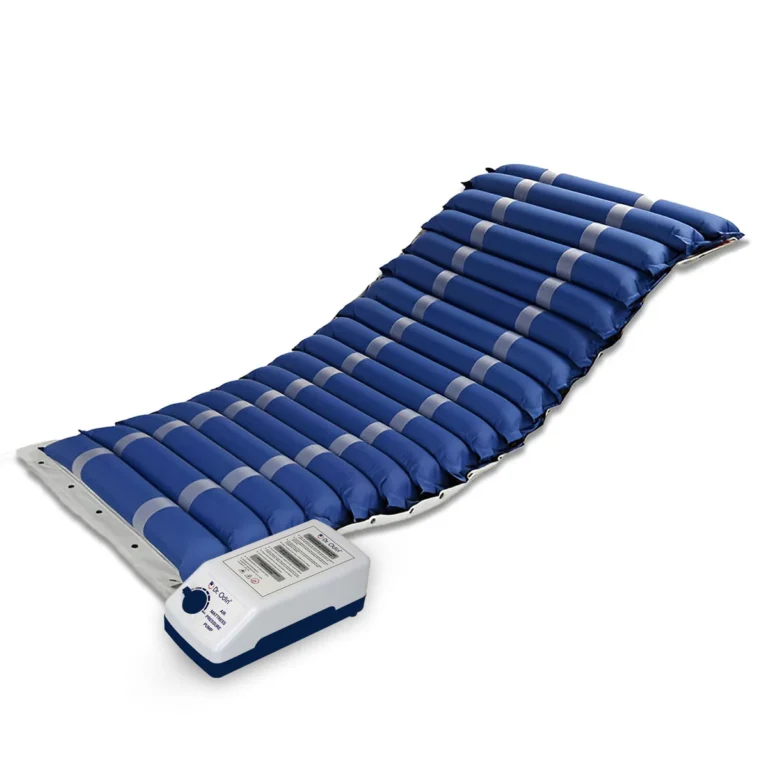
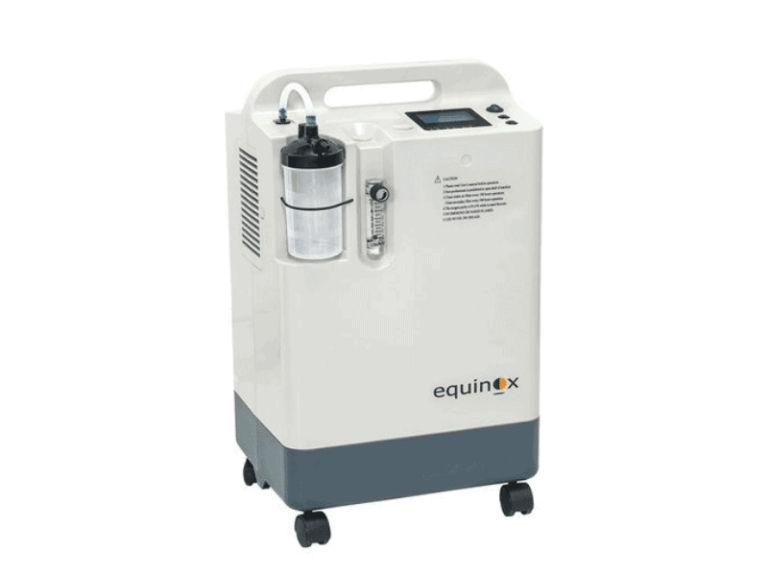
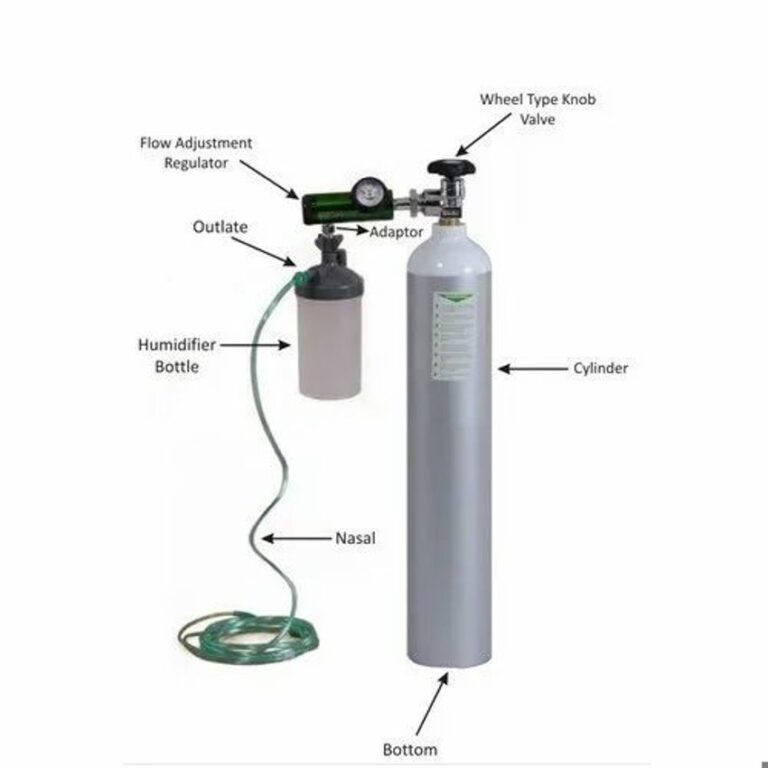
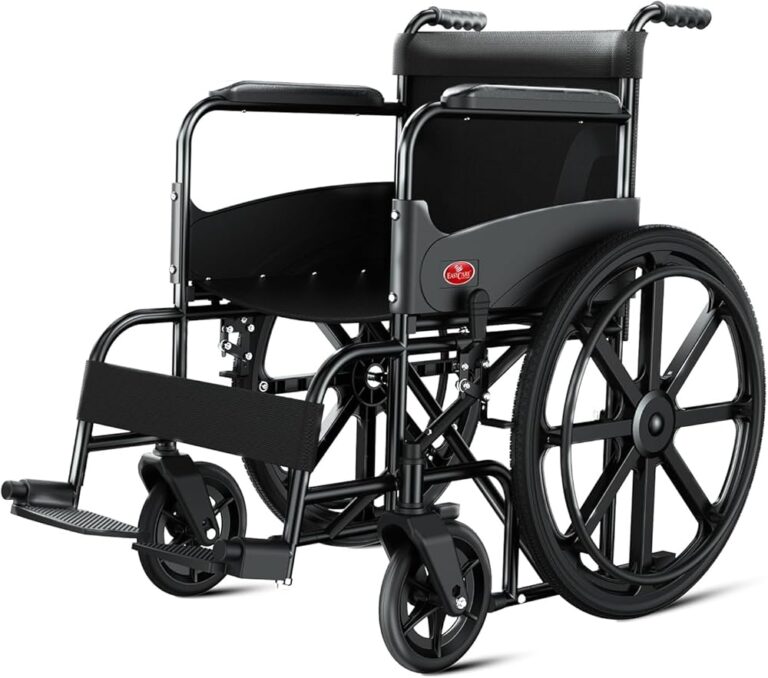
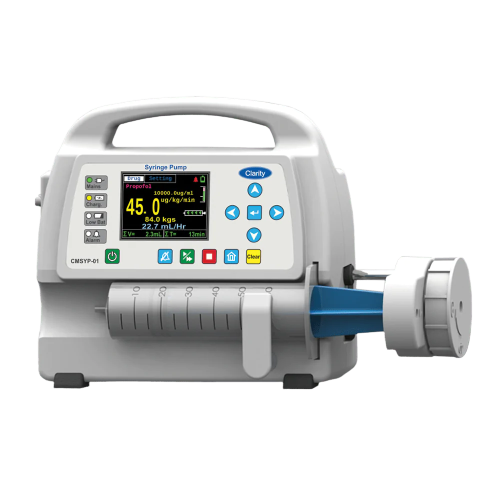
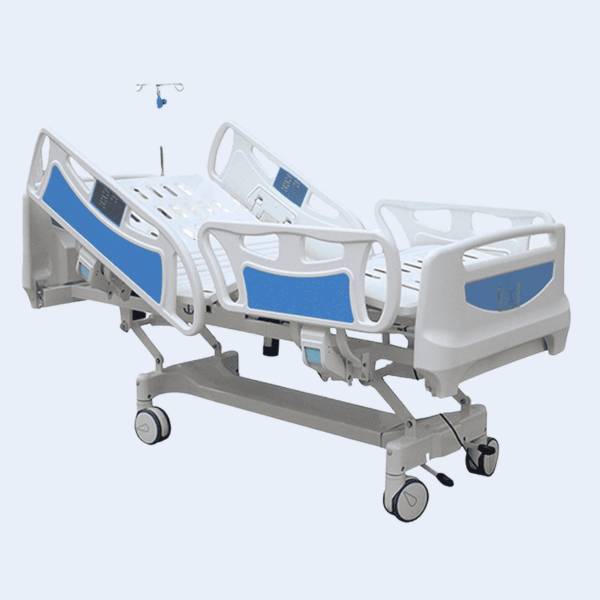
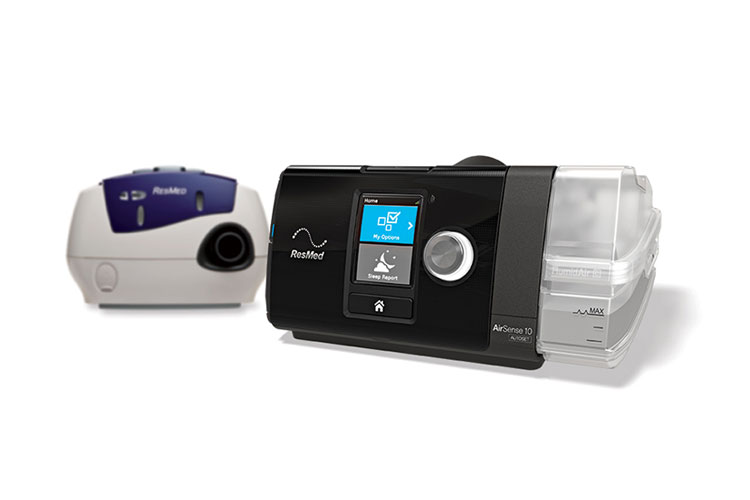
Medical Equipment List

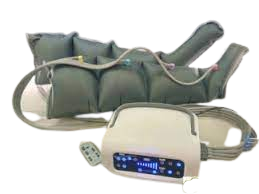
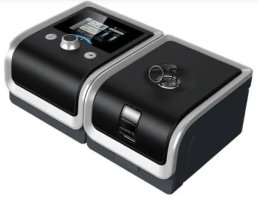
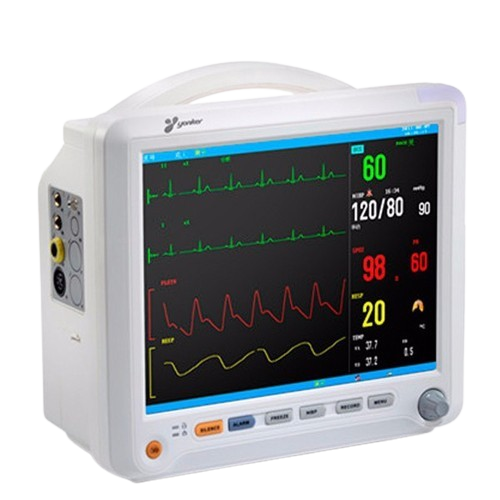
Who Needs a DVT Pump?
A DVT pump is advised for those who are prone to having life-threatening blood clots during their recovery period following surgery or immobilization. The list below contains information on patients who usually respond well to the use of the DVT pump:
Post-Orthopedic Surgery Patients recovering from knee replacement, hip replacement, and other major orthopedic surgeries.
Cardiac Surgery Patients Following open heart surgery, bypass procedures, or other cardiac interventions, patients require effective circulatory support.
Stroke and Neurological Patients Stroke patients with partial or complete limb paralysis face serious DVT risks due to prolonged immobilization—sequential compression therapys.
Extended Bed Rest: A person who requires long-term bed rest owing to health problems, physical injuries, or post-surgery recuperation will always be at greater risk of developing DVT.
Cancer Patients: People who are receiving chemotherapy or radiation treatments for cancer are at high risk of developing DVT.
Post-Abdominal Surgery Patients recovering from major abdominal surgeries, including bowel resection, hysterectomy, and other procedures.
Elderly Immobilized Patients Elderly patients with naturally reduced circulation and limited mobility face consistently elevated.
Long-Haul Travel Recovery: Patients with existing circulatory conditions or recent surgeries requiring extended travel face increased clotting risks.
How Our Rental Process Works




Safety Tips for Using a DVT Pump?
Using a DVT pump correctly is essential for safe and effective blood clot prevention. Always follow these key safety guidelines throughout therapy.
Follow Doctor’s Prescription—Never adjust compression pressure or therapy duration beyond what your doctor has specifically prescribed.
Ensure Correct Garment Fit — Compression sleeves or boots must fit comfortably and securely — too tight or too loose will compromise therapy effectiveness.
Never Use on Broken Skin — Never apply compression over wounds, skin infections, or irritated areas—always inspect skin before every session.
Monitor Skin Condition — Regularly check skin beneath compression garments for redness, pressure marks, or irritation during extended therapy sessions.
Never Use if DVT is Confirmed — If a blood clot is already diagnosed, never use a DVT pump without specific doctor approval — compression can dislodge existing clots.
Ensure Correct Limb Positioning — Always position the limb correctly within the compression garment before starting; incorrect positioning significantly reduces effectiveness.
Stop if Pain or Numbness Occurs — Immediately stop therapy and consult your doctor if you experience sudden pain, numbness, or tingling during sessions.
Keep Machine Stable — Always place the DVT pump on a stable, flat surface — preventing accidental movement or disconnection of compression tubes during therapy.
Prevention and Precautions During DVT Pump Therapy?
Taking the right precautions during DVT pump therapy ensures safe, effective, and complication-free blood clot prevention throughout recovery.
Attend Regular Follow-Ups — Never skip scheduled doctor appointments; regular monitoring ensures therapy settings are appropriately adjusted throughout recovery.
Maintain Proper Hygiene — Keep the skin beneath compression garments clean and dry to prevent infections and irritation that could interrupt therapy progress.
Avoid Overuse of the Machine — Never exceed the prescribed daily therapy hours; overuse can cause skin irritation and unnecessary discomfort during recovery.
Wear Appropriate Clothing — Always wear thin, smooth clothing beneath compression garments to prevent fabric bunching and uneven pressure distribution during therapy.
Stay Hydrated — Adequate hydration helps maintain healthy blood viscosity, significantly reducing the risk of blood clots during post-surgical recovery and immobilization.
Combine with Prescribed Medications — Always continue anticoagulant medications alongside DVT pump therapy—combining both delivers the most effective blood clot prevention.
Perform Gentle Movements When Possible — Encourage gentle ankle rotations between therapy sessions; supplementing DVT pump therapy with light activity further reduces blood pooling.
Communicate Concerns Immediately — Report any unusual pain, swelling, skin changes, or breathlessness to your doctor immediately — these could indicate developing complications.
Benefits of Using a DVT Pump?
However, the DVT pump is not only about reducing the risk of developing clots. As such, regular use of DVT pumps for individuals recovering from surgery or who are immobile for long periods can considerably improve their well-being.
Prevents Dangerous Blood Clot Formation. Sequential compression therapy maintains continuous venous circulation—effectively preventing life-threatening deep vein thrombosis from developing silently during post-surgical recovery and prolonged immobilization.
Reduces Risk of Pulmonary Embolism Regular DVT pump therapy significantly reduces the risk of blood clots traveling to the lungs—providing essential protection against potentially fatal pulmonary embolism during high-risk post-surgical recovery periods.
Reduces Post-Surgical Swelling Sequential compression effectively reduces post-surgical swelling and fluid accumulation in the limbs—improving patient comfort, accelerating tissue healing, and preventing complications associated with prolonged limb swelling.
Improves Blood Circulation DVT pump therapy actively stimulates healthy venous blood circulation—preventing dangerous blood pooling; maintaining healthy oxygen delivery to tissues; and supporting faster, more comfortable post-surgical recovery.
Complements Anticoagulant Therapy Mechanical compression therapy works effectively alongside prescribed anticoagulant medications—significantly enhancing overall blood clot prevention for high-risk post-surgical and immobilized patients during recovery.
Reduces Pain and Discomfort Regular compression therapy naturally reduces post-surgical limb pain, heaviness, and discomfort—improving overall patient comfort and supporting a more positive, manageable recovery experience at home.
Why Choose Medifyhome for a DVT Pump for Rent in Hyderabad?
When it comes to post-surgical blood clot prevention at home, Medifyhome is Hyderabad’s most trusted medical equipment rental partner. Every DVT pump in our inventory is clinically maintained, professionally serviced, and thoroughly inspected before delivery—ensuring safe, effective, and reliable compression therapy for every patient. Our experienced team will deliver straight to your doorstep, take care of all setup processes, and provide operational advice so that patients and their carers can be completely assured of handling the treatment at home. Recognizing that surgery recovery costs can be prohibitive for the average family, we provide affordable weekly/monthly payment schemes. With transparent pricing and absolutely no hidden charges, the entire rental process remains smooth, simple, and completely stress-free. Most of all, our committed team is there round-the-clock to take care of you and your needs and to ensure continuous therapy throughout the recovery period.
Testimonials
“The DVT pump has been highly effective in improving venous circulation and preventing post-operative complications. Easy to use and reliable for patient care.”
Dr. Rajesh Mehta
Vascular Surgeon
“We use the DVT pump regularly for immobile patients, and it provides excellent sequential compression. Comfortable for patients and simple to operate.”
Priya Sharma
ICU Nurse
“This device has been valuable in post-surgical recovery, helping reduce the risk of deep vein thrombosis. The compression therapy is consistent and effective.”
Dr. Anjali Verma
Orthopedic Specialist
FAQ's
- A DVT pump functions by irregularly compressing the legs, which mimics natural muscle contractions. This helps to move blood through the veins, reducing the likelihood of blood clot formation.
- Patients recovering from surgery, individuals with limited mobility, and those who are bedridden can benefit significantly from using a DVT pump. It helps maintain blood flow and prevents the development of deep vein thrombosis.
- DVT pumps are designed to be user-friendly and can be used at home under the guidance of healthcare professionals. Renting a DVT pump at Hyderabad allows patients to receive essential compression therapy in the comfort of their own homes.
- The cost of renting a DVT pump in Hyderabad is Rs.4999 to 7499. For precise pricing and to book your rental, please contact Medifyhome directly at 91009 07036 or 91009 07622.
Compression stockings provide passive static pressure, while a DVT pump delivers active sequential pneumatic compression—making DVT pump therapy significantly more effective for high-risk post-surgical patients requiring intensive circulatory support.
DVT pumps are indicated in individuals who have undergone knee replacements, hip replacements, heart surgeries, abdominal surgeries, and even those with conditions that lead to immobility due to the risk of thrombus formation.