
Sleep Apnea: Early Warning Signs, Health Risks, Diagnosis and Treatment SleepRead More
Dengue in 2026: Why It’s Changing in India, Symptoms, Tests, Warning Signs & Prevention
Dengue remains a significant public health problem in India. Not only is it common during the monsoon and post-monsoon periods, but other factors could influence the occurrence of dengue throughout the year. Knowledge about dengue transmission, signs and symptoms and the time when to consult a doctor is crucial in dealing with this disease.
Consider a situation in Hyderabad when the family is storing water in containers during a water shortage. If the containers are open, they will serve as a breeding ground for Aedes mosquitoes. Another breeding ground for mosquitoes can be found in dumped tires in the construction area and water accumulated in flower pots during rain. As we see, the ways for the occurrence of dengue are diverse, and one needs to know how to protect oneself from it.
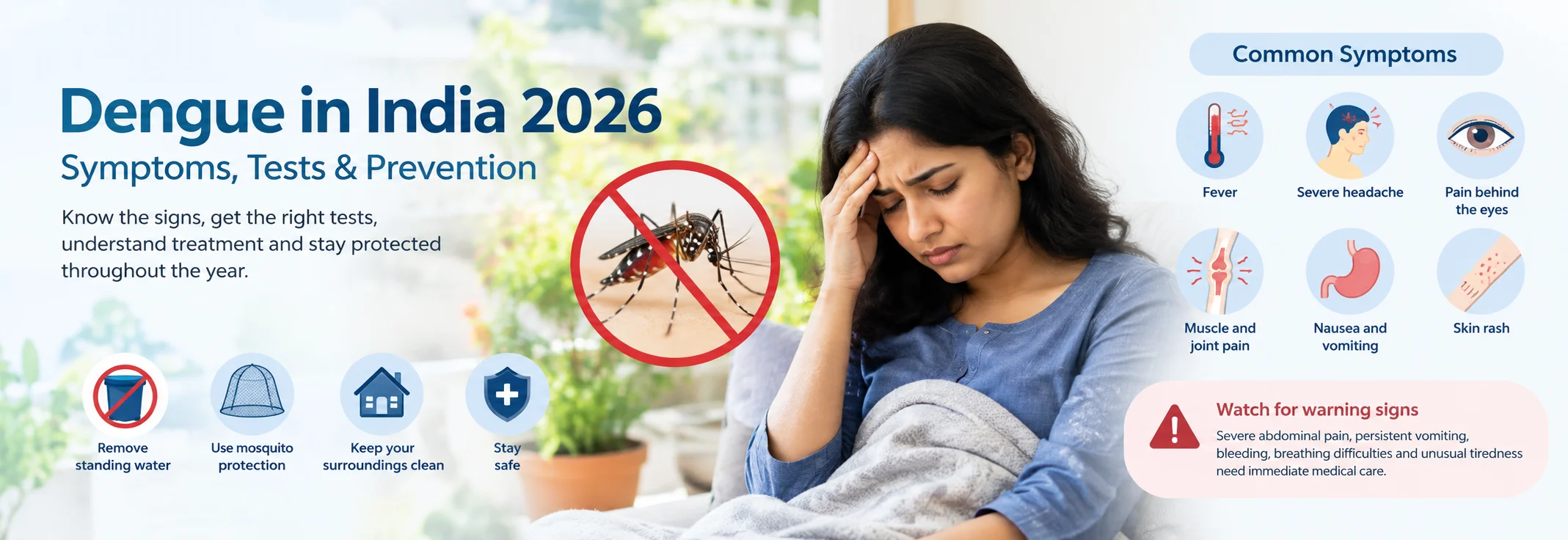
Dengue is caused by a virus spread predominantly through the Bite of the Aedes mosquito. The signs of common dengue are Fever, severe headache, pain behind the eyes, muscle and joint pain, nausea, vomiting and skin rash. It goes without saying that some patients will need urgent hospitalization due to complications.
One important fact about dengue is that the danger does not always end when the Fever goes away. Warning signs such as severe abdominal pain, persistent vomiting, bleeding, breathing difficulties, and unusual tiredness may develop around this time. Early medical assessment and careful monitoring are therefore essential.
In this guide, we explain why dengue in India can occur beyond the monsoon, how symptoms develop day by day, which dengue tests doctors may recommend, what platelet counts really mean, how dengue differs from malaria and other viral fevers, and how to practise effective dengue prevention at home.
Table of Contents
Dengue in India Is Changing: Is It Still Just a Monsoon Disease?
The monsoon remains an important period for dengue transmission in many parts of India, but dengue is not restricted to these months. Cases can occur at other times when infected mosquitoes are present, and environmental conditions support their breeding.
There is variation in dengue season across different regions in India. Several factors like rainfall, temperature, humidity, water storage methods, drainage, and mosquito elimination practices may affect the timing of increased occurrence of dengue. There may be cases increasing in one place during monsoon and extending to the period after showers in other places.
For instance, rainwater may gather in discarded receptacles in the surroundings of an apartment. In another area, open overhead water tanks and water coolers may create a breeding ground for mosquitoes in a fairly dry season.
Why does dengue often increase during and after the monsoon?
Rain can fill containers, potholes, discarded tyres, and other objects with water. These places can provide suitable conditions for Aedes mosquitoes to lay eggs. When temperatures and other environmental conditions are favourable, mosquito populations may increase.
However, this does not always occur immediately after rain. Factors such as the life cycle of mosquitoes, the virus transmission process, and even the recognition of the disease by humans could play a role in this matter.
Can dengue occur during winter or summer?
Yes. Dengue can happen even when the monsoon is not there. Appropriate breeding sites can be found in stored water, waste containers, and untidy places. The temperature is another factor that impacts the behavior of mosquitoes and the incubation of the virus. This does not mean that every month carries the same risk across India. Local conditions and surveillance data are important when assessing dengue activity in a particular city or state.
What should families understand about dengue in 2026?
The best strategy is not to assume that dengue prevention needs to happen only in the rainy season. Always look out for standing water, prevent mosquito bites, and visit your doctor if you have dengue symptoms.
The term “dengue 2026” is of great importance when trying to solve the current health problems. Nevertheless, the claims about increased levels of dengue or longer dengue seasons should be backed by the current surveillance statistics and not just weather forecasts.
What Is Dengue Fever?
Dengue fever is a viral infection caused by the dengue virus, commonly abbreviated as DENV. It spreads mainly through the Bite of an infected Aedes mosquito, particularly Aedes aegypti.
There are four types of dengue viruses: DENV-1, DENV-2, DENV-3, and DENV-4. Once you have been exposed to any one type of dengue virus, it gives you lifelong immunity against the same serotype but not the other serotypes, which makes it possible for someone to be affected by dengue multiple times. Infection with another type of dengue after being affected once can put you at a higher risk of becoming severely ill.
What causes dengue fever?
The immediate cause of dengue fever is infection with the dengue virus after a bite from an infected mosquito. The risk of infection increases where infected mosquitoes and people come into contact.
Aedes mosquitoes can breed in relatively small amounts of standing water. Common examples include:
- Uncovered water storage containers and overhead tanks.
- Flower pots, trays, and plant containers.
- Water coolers that are not cleaned regularly.
- Discarded tyres, plastic cups, and cans.
- Construction materials or waste that collect rainwater.
Finding mosquitoes around a home does not automatically mean someone has dengue. The mosquito must be carrying the virus to transmit dengue infection.
Does dengue spread from one person to another?
Dengue does not usually spread through everyday contact, such as sharing food, sitting together, or touching an infected person.
However, a mosquito can bite a person who has dengue and later transmit the virus to another person. This makes mosquito bite prevention important even when someone in the household has already been diagnosed.
How serious can dengue become?
Some people do not exhibit any symptoms, while others may develop a fever accompanied by body pains. Some other patients develop severe dengue infection that includes fluid loss from the blood vessels, hemorrhaging, shock, and organ damage. There is no specific antiviral medicine that cures dengue. Treatment focuses on appropriate fluids, fever management, medical monitoring, and timely treatment of complications.
Why Is Dengue No Longer Just a Monsoon Disease in India?
Dengue transmission is influenced by several connected factors. Weather plays a role, but so do the way people store water, how neighbourhoods manage waste, and whether mosquito breeding sites are removed.
1. Rising temperatures
Temperature influences mosquito survival, biting, and the rate of development of the dengue virus in mosquitoes. Provided that the conditions are right, warmer temperatures could play a role in ensuring that the process of transmission is more efficient.
This is, however, not always the case because too much heat reduces mosquito survival rates. It does not necessarily account for trends of dengue in all Indian cities.
2. Changing rainfall patterns
Rainfall can create new breeding sites, while irregular rainfall may leave water collected in containers for long periods.
For example, a discarded plastic container on a terrace may collect water after a short shower. If it is not emptied and cleaned, it can become a mosquito breeding site. Water can also collect in blocked drains and poorly maintained construction areas.
3. Rapid urbanisation
In expanding urban areas, there are likely to be congested residential areas, construction sites, places where water is stored, and problems with disposing of waste. Under such circumstances, mosquitoes will breed. A building with an uncovered water tank may create a breeding problem even if the surrounding streets look clean. This is why checking less visible areas is just as important as cleaning floors and balconies.
4. Water storage and household practices
Where there is an uneven supply of water, people may have to store it. However, storage of water is not the issue but rather poor maintenance or exposure of the containers. Keep tanks and containers tightly covered. Regularly clean and scrub containers where mosquito eggs may remain attached to the sides, following local public health advice.
5. Why dengue prevention must continue beyond the monsoon
Mosquitoes can breed at any time provided there are appropriate conditions. It is not necessary to wait until there is an outbreak of dengue or the rainy season to inspect your house. A simple weekly inspection of terraces, balconies, bathrooms, gardens, coolers, and water storage areas can help identify potential breeding sites early.
What Are the Symptoms of Dengue?
Dengue symptoms usually begin around 4–10 days after an infected mosquito bite. Some people may have no symptoms, while others develop a sudden fever and several other signs of infection.
Common dengue symptoms include:
- High Fever: Dengue often begins with a sudden high fever that may reach 104°F (40°C).
- Severe Headache: A person may experience a strong headache that makes it difficult to focus or carry out daily activities.
- Pain Behind the Eyes: Pain or pressure behind the eyes may become worse when moving them.
- Pain in Muscles, Joints or Bones: Severe body aches may lead to muscle, joint or bone pain.
- Nausea and Vomiting: Dengue can cause nausea, reduced appetite, and vomiting, potentially leading to dehydration.
- Skin Rash: A red rash may appear on the skin a few days after the Fever begins.
- Weakness and Tiredness: Extreme tiredness and weakness may occur during the illness and can continue even after the Fever subsides.
- Mild Bleeding: Some people may experience bleeding gums, nosebleeds, or easy bruising, which should be taken seriously and assessed by a healthcare professional.
Not everyone experiences every symptom. Dengue can also resemble other infections, including chikungunya, malaria, and other viral fevers. Symptoms alone cannot confirm the diagnosis.
Dengue symptoms day by day
The following timeline is a general guide. Individual experiences differ, and symptoms do not always develop in a fixed order.
Days 1–3: The early fever stage
A person may develop a sudden high fever, headache, body pain, pain behind the eyes, and weakness. Nausea or reduced appetite may also occur.
For example, someone may wake up feeling well but develop a fever and severe body aches by the afternoon. These symptoms could be dengue, but they can also occur with other infections.
If dengue is possible, consult a healthcare professional rather than relying on symptoms alone. The doctor can assess whether testing is needed and explain what warning signs to watch for.
Days 3–7: The period requiring careful monitoring
It can either persist or start declining. Some patients are already improving, but others have warning signs.
Be very careful about the presence of extreme abdominal pain, vomiting, blood, excessive fatigue, irritability, or decreased urination. These cannot simply be brushed aside as simple weakness.
After the Fever falls: Recovery or a critical phase
The fall in temperature can mark the beginning of recovery, but it can also coincide with the critical phase of dengue. In patients who develop complications, fluid leakage from blood vessels may cause circulation problems or shock.
The critical phase often lasts around 24–48 hours. Continue following medical advice and monitoring symptoms even when the Fever has disappeared.
How long does dengue Fever last?
Fever commonly lasts around 2–7 days. Many people recover within one to two weeks, although tiredness can continue for several weeks after the acute illness.
Recovery time depends on the severity of the illness, the person’s overall health, and whether complications develop.
Dengue Warning Signs: When Is It an Emergency?
Recognising severe dengue warning signs can help prevent dangerous delays in treatment. Severe dengue is a medical emergency and may progress rapidly.
Warning signs that should not be ignored
Seek urgent medical care if someone with suspected or confirmed dengue develops any of the following:
- Severe or ongoing abdominal pain.
- Persistent vomiting, especially repeated episodes.
- Nose or gum bleeding.
- Blood in vomit or stool.
- Rapid or labored breathing.
- Unusual fatigue, restlessness, or confusion.
- Cold, pale, or clammy skin.
- Dizziness, fainting, or signs of poor circulation.
- Passing much less urine than usual.
For example, a person whose Fever has fallen may suddenly develop severe stomach pain and repeated vomiting. Even if the temperature is normal, this situation needs urgent medical assessment.
Why can dengue become dangerous after the Fever goes down?
Some patients have fluid leakage from blood vessels into surrounding tissues as a result of the body’s reaction to dengue. This may result in shock or low blood pressure by lowering the volume of fluid in the blood. Severe bleeding and organ complications can also occur. The critical period often begins as the Fever subsides, so patients should not assume that a normal temperature means they are safe.
When should you go to the hospital?
Go to an emergency department immediately if warning signs appear. Do not wait for the next blood test or for the platelet count to fall further.
People who are pregnant, very young, older, or living with significant medical conditions may need closer medical assessment. A healthcare professional should help decide whether home monitoring is appropriate or hospital care is necessary.
What should you avoid when dengue is suspected?
Avoid aspirin and non-steroidal anti-inflammatory medicines such as ibuprofen unless a clinician specifically advises otherwise. These medicines can increase bleeding risk.
Avoid self-medication using antibiotics, steroids, or platelet-increasing medications, among others. If you think you have dengue, consult a medical professional for fever treatment and proper hydration tips.
Dengue Tests: Which Test Detects Dengue and When Should You Get Tested?
Dengue testing depends on the number of days since symptoms began. Doctors consider the patient’s symptoms, travel or local exposure, medical history, and examination findings before choosing tests.
A blood test can help confirm dengue, but treatment and clinical assessment should not be delayed when a healthcare professional suspects a serious illness.
1. NS1 antigen test
The dengue NS1 antigen test looks for a protein produced by the virus. It is particularly useful during the early stage of illness, generally within the first seven days.
For example, if a person develops Fever on Monday and visits a doctor on Wednesday, the doctor may consider an NS1 antigen test, depending on the clinical situation and local testing guidance.
A negative NS1 result does not always rule out dengue. The timing of the sample and the test’s performance can affect the result.
2. Dengue IgM antibody test
The IgM test looks for antibodies produced by the immune system in response to infection. These antibodies often become detectable several days after symptoms begin.
IgM testing is particularly useful later in the illness, although the exact timing varies. A doctor may recommend it when an early test is negative or when the patient presents later.
A positive IgM test is to be taken into account with clinical findings, since serologic tests can sometimes give positive results against related viruses too.
3. Dengue IgG antibody test
IgG antibodies may indicate a previous dengue infection or an immune response associated with the current illness. A single IgG result is generally not enough to diagnose an acute dengue infection reliably.
Doctors interpret IgG results according to the test used, the timing of the sample, and whether other blood tests or earlier samples are available.
4. RT-PCR and other molecular tests
Molecular tests, such as RT-PCR, detect genetic material from the dengue virus. They are useful during the early phase of illness and may also identify the virus serotype.
However, such examinations are not always mandatory. The physician will select an adequate test depending on the situation.
5. CBC and platelet count in dengue
White blood cells and platelets are two of the blood components measured by a full blood count, or CBC. In order to evaluate variations in the concentration of red blood cells, doctors may also keep an eye on haematocrit. During dengue, platelet counts and white blood cell counts may fall. A rising haematocrit can be a warning sign of fluid leakage when interpreted with other clinical findings.
A CBC helps monitor the illness, but it cannot confirm dengue by itself.
When should you get a dengue test?
If you develop a high fever with headache, body pain, pain behind the eyes, or other possible dengue symptoms, contact a healthcare professional promptly.
Testing for NS1 antigens or molecular tests during the acute phase, and antibodies later, may be done by the physician when necessary. Another diagnostic test that may be done is the CBC test in order to monitor the patient’s condition. However, you cannot conclude that a person does not have dengue because of one negative result.
Dengue and Platelet Count: What Does It Really Mean?
Platelets are small blood components that help the body form clots and control bleeding. During dengue, platelet levels may fall, which is why doctors sometimes recommend repeat blood tests.
However, platelet count is just one part of the whole assessment. While a patient with problems can require immediate medical attention, a patient with a low platelet count might not have dengue. Physicians take into account the patient’s symptoms, blood pressure, circulation, bleeding, urine production, haematocrit, and platelet trends.
What platelet count is dangerous in dengue?
A typical adult platelet reference range is approximately 150,000–450,000 per microlitre of blood, although laboratory ranges may differ.
A count below 150,000 is generally considered low. A count below 100,000 may require closer monitoring, and very low counts may prompt further assessment depending on the patient’s symptoms and clinical condition.
There is no single platelet count that automatically determines whether dengue is severe or whether a platelet transfusion is needed.
For example, a person with a platelet count of 80,000 and no warning signs may be managed differently from someone with a higher count who has severe abdominal pain, bleeding, or signs of shock. The treating clinician must assess the complete picture.
Do platelet counts always fall throughout dengue?
No. Platelet counts can change over the course of the illness. They may fall during the acute phase and recover as the person improves. The timing and extent of these changes vary.
A single blood test gives only a snapshot. Doctors may compare repeated results with symptoms and other clinical measurements to understand the trend.
Can food or home remedies increase platelets quickly?
A proven domestic remedy is absent for dengue fever, nor is there any speedy method of increasing the platelet count. Proper nutrition and proper intake of fluids might help with the recovery process, but these cannot replace medical supervision.
Any supplements, medicines that help increase the platelet count and even products derived from the leaves of the papaya plant should never be taken as an alternative to medical guidance.
The mere fact that the count is low does not always necessitate platelet transfusions. The medical staff should make transfusion decisions based on the patient’s state and clinical recommendations.
Dengue vs Viral Fever vs Malaria: How Are They Different?
Dengue, other viral fevers, and malaria can cause overlapping symptoms. It is not always possible to tell them apart based on fever pattern or body pain alone.
| Feature | Dengue | Viral Fever | Malaria |
|---|---|---|---|
|
Cause
|
Dengue virus
|
Different types of viruses
|
Plasmodium parasite
|
|
Spread
|
Bite of an infected Aedes mosquito
|
Depends on the virus; often through respiratory droplets or contact
|
Bite of an infected Aedes mosquito
|
|
Common symptoms
|
High Fever, headache, pain behind the eyes, muscle and joint pain, sometimes rash
|
Fever, body aches, headache, and sometimes cough or sore throat
|
Fever, chills, sweating, headache, and weakness
|
|
Fever pattern
|
May last around 2–7 days
|
Varies by infection
|
May occur in cycles, but not always
|
|
Blood test findings
|
Platelets may decrease; other blood changes may occur
|
Depends on the virus and illness
|
Tests may detect malaria parasites or their antigens
|
|
Major risks
|
Severe bleeding, fluid leakage, shock, or organ complications
|
Depend on the virus and complications
|
Severe anaemia, organ damage, or cerebral malaria
|
|
Diagnosis
|
NS1 antigen, molecular, or antibody tests, depending on timing
|
Tests based on suspected infection
|
Blood smear or rapid diagnostic test
|
|
Treatment
|
Supportive care and medical monitoring
|
Depends on the virus; supportive care is common
|
Antimalarial medicines prescribed by a doctor
|
Why is testing important?
A person with fever and body pain may assume it is a routine viral fever, but malaria and dengue require different approaches to diagnosis and treatment.
For example, chills and sweating can occur with malaria, while pain behind the eyes may occur with dengue. However, neither symptom is specific enough to confirm an illness.
A healthcare professional can recommend the appropriate tests based on the symptoms, local disease patterns, and medical history. Seek urgent care if severe weakness, confusion, bleeding, breathing difficulty, or other warning signs develop.
How to Prevent Dengue at Home
Eliminating places where mosquitoes breed and avoiding mosquito bites are the two main strategies for preventing dengue. When used consistently in homes and communities, this strategy works best.
1. Prevent mosquito breeding
Check your home at least once a week for objects that collect water. Empty and clean buckets, flower pots, trays, coolers, and other containers.
For example, a plant tray that looks harmless may hold water for several days. Emptying it regularly helps remove a potential breeding site.
Do away with unnecessary receptacles, old tires, and plastics appropriately. Inspect terraces, balconies, gardens, and places around the back of appliances that may hold water.
2. Keep water storage containers covered
In homes where water must be stored, use tightly fitting lids. Inspect overhead tanks and other storage areas for gaps or damage that could allow mosquitoes to enter.
Clean containers regularly, following local public health recommendations. Simply adding water to an old container without cleaning it may leave mosquito eggs attached to the sides.
3. Clean your surroundings
Dispose of garbage that may collect water, keep drainage zones clear, and report breeding places of mosquitoes in public areas to the concerned authorities.
In residential colonies, precautions must take into account common balconies, basements, parking areas, gardens, and construction sites as well as individual homes.
4. Prevent mosquito bites
Follow the label’s instructions when using a mosquito repellent. When possible, cover your body by dressing in long-sleeved shirts and pants. When using repellents on children, follow age-specific guidelines. Products should not be used in the mouth, eyes, on injured skin, or in any other areas specified on the label.
5. Use mosquito nets and window screens
It is advisable to use screens on doors and windows where possible. For children and people sleeping during the day, it would be better to use mosquito entanglements for more protection.
Protection should not just be done at night since Aedes mosquitoes bite during daytime.
6. Continue prevention after the monsoon
Do not wait for heavy rainfall to start checking for standing water. Stored water, discarded containers, and other breeding sites can remain a problem during dry periods.
Make dengue prevention a weekly household routine throughout the year.
7. Help prevent transmission when someone has dengue
A person with dengue should avoid mosquito bites as much as possible while ill. Use appropriate repellents, screens, or mosquito nets so mosquitoes are less likely to bite the infected person and subsequently spread the virus to others.
Follow the treating clinician’s advice about care and monitoring, and seek immediate medical attention if warning signs appear.
Can Dengue Testing and Monitoring Be Done at Home?
Yes. In many areas, diagnostic services can collect blood samples at home for dengue testing. A trained sample collector takes the sample and sends it to a laboratory for analysis.
Depending on the stage of the sickness, the doctor may recommend an NS1 antigen test, a dengue antibody test, a molecular test (if any), or a CBC test to follow platelet counts and blood changes.
What are the benefits of home sample collection?
Home sample collection may be convenient for unwell people, those who have difficulty travelling, or those who need blood tests arranged at home. It can also reduce the need to travel to a diagnostic centre while unwell.
However, the service should be provided by a qualified professional, and the test should be processed by an appropriate laboratory.
Can dengue be monitored entirely at home?
Not always. Some patients with mild dengue may be monitored at home under medical supervision, with adequate oral fluids, rest, and scheduled follow-up.
The doctor may advise monitoring temperature, fluid intake, urine output, symptoms, and repeat blood tests. Follow-up frequency depends on the illness stage and the patient’s condition.
Home monitoring is not a substitute for medical assessment. If severe abdominal pain, persistent vomiting, bleeding, breathing difficulty, fainting, or unusual weakness occurs, seek emergency care immediately rather than waiting for a home sample collection or test result.
Book 24*7 Service
Frequently Asked Questions About Dengue
What are the first symptoms of dengue?
Early dengue symptoms often include high Fever, headache, pain behind the eyes, muscle and joint pain, nausea, and tiredness. Symptoms generally begin several days after an infected mosquito bite, but they can vary between people.
How do I know if my Fever is dengue?
Fever with severe body pain, headache, pain behind the eyes, or a rash may suggest dengue. However, these symptoms also occur in other illnesses. A healthcare professional may recommend blood tests to confirm the diagnosis.
Can dengue occur without a rash?
Yes. Some people with dengue have Fever, headache, body pain, or tiredness without developing a visible rash. The absence of a rash does not rule out dengue.
Is dengue still a seasonal disease in India?
Though dengue usually becomes prevalent during and immediately after the monsoon season, infection may take place at other times of the year depending on whether there are infected mosquitoes and favorable breeding sites.
When should I take a dengue test?
Seek medical advice as soon as dengue is suspected. The right test depends on how long ago symptoms began. If warning signs appear, get medical care without delay.
What is the NS1 test for dengue?
The NS1 antigen test detects a protein associated with the dengue virus. It is commonly used during the early stage of infection, particularly within the first seven days of illness.
What happens to platelet count during dengue?
Platelet levels may decrease during dengue and then recover as the patient improves. Doctors monitor platelet trends alongside symptoms and other blood results to assess the patient’s condition.
What platelet count is dangerous in dengue?
There is no single platelet count that determines whether dengue is severe. Very low counts may require closer assessment, but bleeding, circulation problems, severe abdominal pain, and other warning signs are also important.
Can dengue be treated at home?
Mild dengue cases can be treated at home under the guidance of a doctor, with proper hydration, bed rest, and monitoring. Visit a hospital immediately if you experience severe abdominal pain, vomiting, bleeding, shortness of breath, or fainting.
How many days does dengue Fever last?
The time period of dengue fever is usually about 2-7 days. Most people tend to recover in 1-2 weeks; however, fatigue can persist for weeks. It depends upon how severe the condition is and the general health of the patient.
Can dengue happen more than once?
Yes. There are four main dengue virus serotypes. Infection with one serotype does not provide complete protection against the others, and a subsequent infection may carry a higher risk of severe dengue.
Can dengue become serious after the Fever goes down?
Yes. The period when the Fever falls can be critical because fluid leakage and other complications may develop. Continue monitoring symptoms and follow medical advice even when the temperature returns to normal.
What are the symptoms of dangerous dengue?
The warning symptoms can be severe abdominal pain, repeated vomiting, bleeding from the nose or mouth, presence of blood in vomit or faeces, difficulty breathing, cold and clammy skin, dizziness, and fatigue.
How can dengue be prevented at home?
Eliminate standing water, cover all water storage vessels, clean coolers and flower pots regularly, apply mosquito repellent, use protective clothing, and install window screens. Maintain such preventive measures on a regular basis throughout the year.
Conclusion
The problem of dengue in India persists, and therefore the preventive measures should not be taken only during monsoons. Many factors can affect the transmission of dengue, including weather conditions, storage of water, and breeding of mosquitoes. Understanding the usual symptoms of dengue and when one should undergo tests is very important.
Remember that dengue can become serious even after the Fever falls. Warning signs such as severe abdominal pain, persistent vomiting, bleeding, breathing difficulty, or fainting should never be ignored. A platelet count alone cannot determine how severe the illness is, so clinical assessment and appropriate monitoring remain important.
In our homes, we can take some simple measures that can make all the difference. These measures include removing standing water sources, covering any containers of water, applying mosquito repellents, and checking your environment frequently. In case anyone at home shows symptoms of dengue, it is best to visit a doctor.
Related Blogs
Dengue in 2026: Why It’s Changing in India, Symptoms, Tests, WarningRead More

Urinary Catheter Care at Home: A Complete Guide for Patients andRead More
Post-Hospital Care at Home: A Complete Guide for Patients & FamiliesRead More
10 Signs an Elderly Parent May Need Home Care Support AnRead More

How to Care for a Bedridden Patient at Home: A CompleteRead More