
Sleep Apnea: Early Warning Signs, Health Risks, Diagnosis and Treatment SleepRead More
Sleep Apnea: Early Warning Signs, Health Risks, Diagnosis and Treatment
Sleep apnea is a sleep-related breathing disorder in which a person’s breathing repeatedly stops or becomes shallow during sleep. These interruptions can lower oxygen levels, disrupt normal sleep, and leave a person tired even after seven to nine hours in bed. Because it happens while someone is asleep, they may not realize anything is wrong.
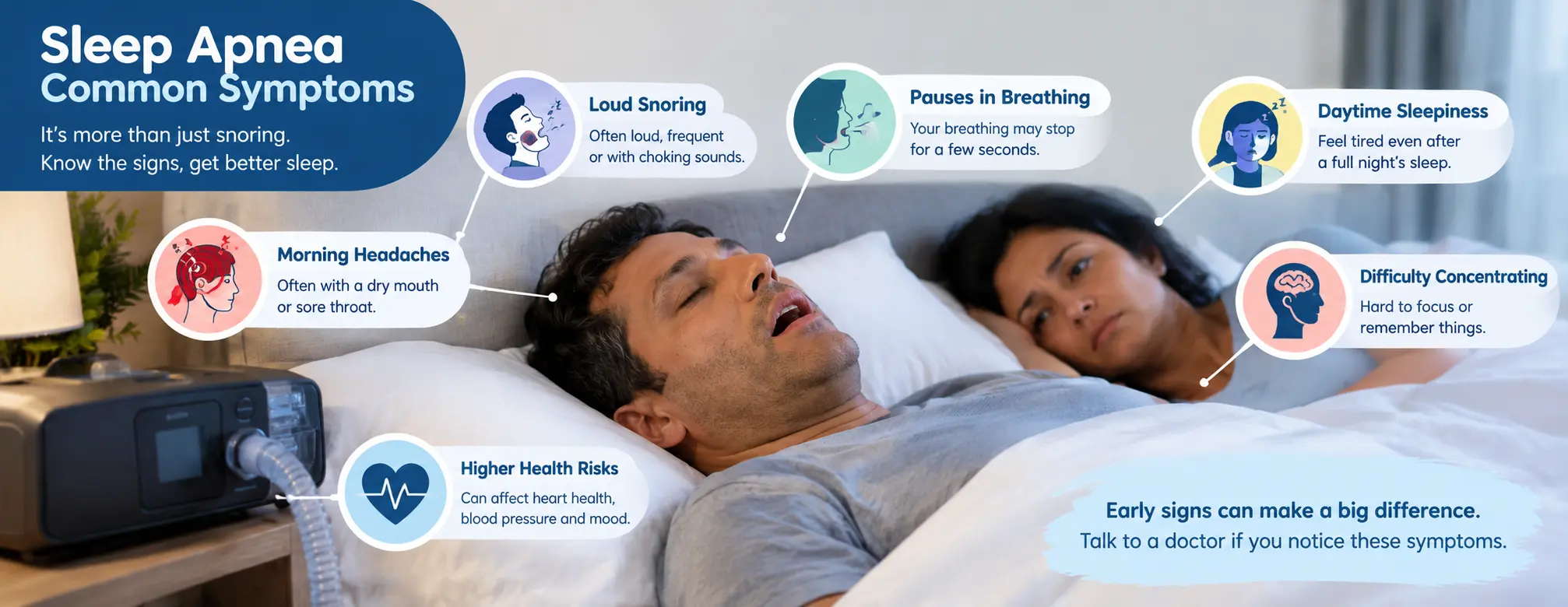
Snoring loudly, breathing with pauses during sleep, experiencing a headache after sleeping, drowsiness during the day, and poor concentration can be some of the signs of sleep apnoea. But not everyone experiences all of these symptoms. Sleep apnoea may occur without snoring, and some people confuse tiredness with stress.
Identifying early symptoms of sleep apnea matters, as untreated sleep apnea can harm heart health, blood pressure, memory, mood, and even safety.
This blog covers the causes, types, symptoms, risk factors, diagnosis, treatments, and complications of sleep apnea.
Table of Contents
What Is Sleep Apnea?
Sleep apnea is a disorder characterized by periodic pauses or reductions in breathing while asleep. Each time, the person’s oxygen level drops temporarily, or the brain briefly wakes up so normal breathing resumes. These awakenings can be so brief that a person may not notice them.
Sleep comprises several phases, all of which play an important role in restoring the body’s and brain’s functionality. On the other hand, breathing difficulties experienced intermittently may interfere with one’s sleep, making them feel tired after sleeping, inattentive and sleepy throughout the day.
Example: Consider someone who gets enough rest but wakes up with a heavy head and still feels drowsy even after morning meetings. This person’s sleeping mate tells him he snores very loudly and stops breathing momentarily while asleep before breathing sharply again. Sleep apnea can affect adults and children. It may occur in people who are overweight, but having a healthy body weight does not completely rule it out.
Early Warning Signs of Sleep Apnea
Sleep apnea symptoms often develop gradually. People may become accustomed to feeling tired or assume work pressure, ageing, or an irregular sleep schedule is causing their symptoms.
Recognizing a combination of nighttime and daytime symptoms can help someone seek medical advice sooner.
1. Loud and Frequent Snoring
Snoring is one of the most common symptoms of OSA. It happens when air passes through a narrow airway, causing the surrounding tissues to vibrate. However, snoring alone does not confirm sleep apnea: some people snore without having the condition, while others with sleep apnea may not snore loudly.
Pay attention when snoring is frequent, unusually loud, or accompanied by choking sounds, gasping, or pauses in breathing.
Example: A person may snore so loudly that their partner moves to another room to sleep. If the snoring is also interrupted by periods of silence followed by sudden gasping, a sleep evaluation may be necessary.
2. Pauses in Breathing During Sleep
A partner or family member may notice that the person appears to stop breathing for short periods during the night.
These interruptions can be difficult to recognize because the affected person is asleep. In obstructive sleep apnea, the airway becomes blocked or narrowed. In central sleep apnea, the brain temporarily fails to send the appropriate signals that control breathing.
Frequent pauses in breathing aren’t just normal snoring. A medical expert must determine whether the pattern warrants an investigation for sleep apnea.
Example: A family member notices that a person’s breathing becomes very quiet for a few seconds, then a loud snorting sound follows. This cycle goes on many times during the night.
3. Gasping, Snorting, or Choking During Sleep
In other instances, the person may experience a choking sound while sleeping. These sounds may occur because the body reacts to a brief pause in breathing. The person may briefly wake up, change position, and fall back asleep without remembering the event. A bed partner may notice these episodes more clearly than the person experiencing them.
A common gasping for air or choking at night should be evaluated, especially if it is accompanied by snoring or daytime sleepiness.
Daytime sleepiness at night with the urge to breathe deeply may be blamed on a blocked nose or sleeping position.
4. Excessive Daytime Sleepiness
Nighttime sleep disturbances can prevent the body from getting the rest it needs. These disturbances can cause ongoing fatigue while working, communicating, reading, or traveling. A person may feel tired even after getting enough sleep. They may also struggle to stay awake during quiet activities or feel an overwhelming need to nap.
Other possible reasons that can cause daytime sleepiness include lack of adequate sleep, certain drugs, or other forms of sleep disorders.
For example, someone may feel drowsy during afternoon meetings despite going to bed at an appropriate time. They rely on coffee to stay awake. In this case, the doctor may suspect sleep apnea.
5. Morning Headaches and Dry Mouth
Some people with sleep apnea wake up with a headache, a dry mouth, or a sore throat. Dry mouth may occur when a person breathes through their mouth during sleep.
Morning headaches are not specific to sleep apnea and can have many causes. However, recurring headaches combined with loud snoring, gasping, or daytime tiredness may justify further investigation.
Example: Every morning, a person wakes up with a dry mouth and a headache. He thinks he needs to drink more water, but his partner says he snores a lot.
6. Difficulty Concentrating and Remembering Things
Poor-quality sleep can affect attention, memory, decision-making, and reaction time. A person may struggle to follow conversations, complete familiar tasks, or remember details from the previous day.
These changes can be mistaken for ordinary tiredness or work-related stress. Sleep apnea is one possible explanation, but other medical and lifestyle factors can cause similar difficulties.
Example: The employee starts making small errors in daily activities and forgets instructions. The employee always wakes up feeling tired each morning. Checking the individual’s sleep pattern can be useful.
7. Frequent Nighttime Awakenings
People with sleep apnea may wake repeatedly during the night. They might suddenly sit up, change position, gasp, or feel unusually light asleep.
Some people don’t remember waking up but still feel tired the next day. Others notice frequent nighttime bathroom trips.
Not all cases of nighttime arousal are caused by sleep apnea because other conditions cause it, such as insomnia, problems with urination, pain, and anxiety.
For instance, a person wakes up several times during the night and does not feel refreshed upon waking. At first, they attribute it to being stressed, but one day a relative notices gaps in their breathing.
8. Mood Changes, Irritability, and Low Motivation
Lack of adequate sleep can affect mood and behavioral control. Those individuals who are experiencing sleep apnea without any proper treatment will get irritated, impatient, anxious, and demotivated very quickly. With persistent tiredness for weeks or months, routine tasks can become harder.
Mood changes alone are not enough for a diagnosis, but they are important when considering other sleep-disturbance symptoms.
Example: A person who used to love participating in various activities feels exhausted and therefore avoids them. This person becomes irritable for minor things and has difficulties concentrating. These factors, along with sleep-related symptoms, need to be discussed with a doctor.
Types of Sleep Apnea
1. Obstructive Sleep Apnea (OSA)
Obstructive sleep apnea is the most common type. It occurs when the upper airway repeatedly narrows or becomes blocked during sleep.
The muscles around the throat relax during sleep. In some people, the tongue and surrounding soft tissues move into a position that restricts airflow. The brain may briefly awaken the person to restore normal breathing.
These risk factors may include obesity, swollen tonsils, certain mouth or throat features, and other anatomical issues.
Example: A person with a narrow upper airway snores loudly and repeatedly stops breathing. A sleep study identifies obstructive sleep apnea, and the clinician recommends an appropriate treatment based on its severity and the person’s medical history.
2. Central Sleep Apnea (CSA)
Central sleep apnea is characterized by the brain’s inability to send the signals needed to control breathing while sleeping. Unlike obstructive sleep apnea, where the problem is due to the blockage of the upper airway, central sleep apnea can arise due to some illnesses, such as heart failure, stroke, and the intake of some medications like opioids. Because its cause may differ from that of obstructive sleep apnea, it should be assessed by a qualified healthcare professional.
Example: An individual with a notable medical problem has an abnormal respiratory system while sleeping. A sleep expert will review the individual’s respiratory system and medical history to determine whether they have central sleep apnea or another breathing problem.
3. Complex or Treatment-Emergent Sleep Apnea
In some cases, patients who have been found to have obstructive sleep apnea will experience central respiratory events upon initiating PAP therapy. This phenomenon is called treatment-emergent central sleep apnea.
This issue requires clinical assessment because different breathing patterns and treatments may be needed. The doctor will evaluate the sleep study and other factors before proceeding with any further action.
Example: A patient is treated for obstructive sleep apnea, but follow-up reveals ongoing breathing difficulties. The physician reviews the results to determine the next steps.
What Causes Sleep Apnea?
The causes of sleep apnea depend on its type. Obstructive sleep apnea involves narrowing or blockage of the upper airway, while central sleep apnea involves problems with the signals that regulate breathing.
Airway Narrowing During Sleep
When throat muscles relax, the airway may narrow too much to allow normal airflow. If the airway closes repeatedly, breathing can become interrupted.
Jaw shape, tongue size, enlarged tonsils, and other anatomical features may affect how easily the airway becomes blocked.
Excess Body Weight
Extra tissue around the neck and upper airway can increase the likelihood of airway narrowing in some people. Excess body weight is an important risk factor for obstructive sleep apnea, but it is not the only cause.
People who are not overweight can also develop sleep apnea because of airway anatomy, age, family history, or other factors.
Enlarged Tonsils and Other Anatomical Features
Large tonsils can narrow the airway, particularly in children. Certain jaw shapes, a smaller airway, or tongue position may also contribute to obstruction.
A healthcare professional may examine the mouth, nose, throat, and jaw when assessing possible obstructive sleep apnea.
Changes in Brain Breathing Control
Central sleep apnea develops when the brain’s breathing-control system does not regulate breathing normally during sleep. Certain medical conditions and medicines may contribute to this problem.
The right evaluation depends on a person’s symptoms, medical history, and sleep-study findings.
Alcohol and Certain Medicines
Alcohol can relax the muscles of the upper airway and may worsen obstructive sleep apnea in some people. Certain sedatives and opioid medicines can also affect breathing during sleep.
People should not stop prescribed medicines on their own. If sleep-related breathing problems develop, they should discuss their medicines with the prescribing clinician.
Risk Factors for Sleep Apnea
Some factors increase the likelihood of sleep apnea, although no single risk factor proves that a person has the condition.
- Excess body weight: Additional tissue around the neck and airway can contribute to obstruction.
- Older age: The likelihood of sleep apnea generally increases with age, although it can occur at any age.
- Family History: Similarities in anatomy and genetics within the family may increase the risk of developing the disorder.
- High Blood Pressure: High blood pressure is often associated with sleep apnea.
- Smoking: Smoking may irritate and inflame the upper respiratory tract.
- Use of alcohol: Consuming alcohol near bedtime can hinder airway relaxation and breathing during sleep.
- Anatomical features: Large tonsils, specific jawbone structure, or a narrow upper airway may contribute to obstruction.
- Medical conditions: Some heart, neurological, hormonal, and other medical conditions are associated with certain types of sleep apnea.
- Certain medicines: Opioids and some sedating medicines can affect breathing during sleep.
Example: Two people may have similar symptoms but different risk factors. One may have excess body weight and high blood pressure, while another may have a narrow jaw and a family history of sleep apnea. Both may need an assessment rather than assuming that their symptoms have the same cause.
Snoring vs. Sleep Apnea: What Is the Difference?
Snoring and sleep apnea can occur together, but they are not the same condition.
| Feature | Dengue | Viral Fever |
|---|---|---|
|
Sound
|
Snoring or noisy breathing
|
Snoring may stop and restart
|
|
Breathing
|
Usually continues
|
Repeated pauses or reduced airflow may occur
|
|
Gasping
|
Not typically present
|
May occur after a breathing interruption
|
|
Daytime alertness
|
May remain normal
|
Excessive sleepiness may occur
|
|
Sleep quality
|
May or may not be affected
|
Often disrupted
|
|
Diagnosis
|
Assessment if persistent or concerning
|
Requires appropriate sleep testing
|
Does Snoring Always Mean Sleep Apnea?
No. Many people snore without having sleep apnea. However, frequent loud snoring becomes more concerning when accompanied by witnessed pauses in breathing, gasping, morning headaches, or persistent daytime tiredness.
Likewise, the absence of loud snoring does not rule out sleep apnea. Some people have less obvious symptoms.
Example: One person snores occasionally when their nose is blocked. Another snores most nights, appears to stop breathing, and feels sleepy during the day. The second person’s symptoms raise greater concern for sleep apnea and warrant medical evaluation.
Sleep Apnea Symptoms in Different Age Groups
Sleep apnea does not look the same in everyone. Symptoms may vary with age, anatomy, other health conditions, and the type of sleep apnea.
Sleep Apnea in Men
Men may experience loud snoring, witnessed breathing pauses, gasping, and excessive daytime sleepiness. Some may also report morning headaches, reduced concentration, or low energy.
However, symptoms vary, and not every man with sleep apnea snores loudly.
Example: A man who works long hours assumes that his daily fatigue is caused by his schedule. His partner notices repeated pauses in his breathing at night, prompting him to seek an evaluation.
Sleep Apnea in Women
Women may experience fatigue, insomnia, morning headaches, mood changes, or unrefreshing sleep. Some do not report the classic symptoms of loud snoring and gasping.
These less obvious symptoms can make sleep apnea harder to recognize. Women experiencing persistent sleep problems should not dismiss them simply because they do not snore loudly.
Example: A woman wakes up tired and can’t concentrate throughout the day. She may think it’s stress. However, after discussing it with a doctor, they can determine whether sleep apnea or another sleep disorder is causing it.
Sleep Apnea in Older Adults
Elderly people may have fragmented sleep patterns, excessive fatigue, memory impairment, or difficulty managing their health problems. These symptoms may co-exist with other diseases or medication side effects.
Changes should be assessed by health care professionals rather than accepting them as something that happens with age.
Example: An older adult begins taking frequent daytime naps and struggles to stay alert during conversations. Their family reports unusual snoring, so the doctor considers whether a sleep study is appropriate.
Sleep Apnea in Children
Sleep apnea syndrome occurs in children and is always accompanied by enlarged tonsils or adenoids. These symptoms can be represented by continuous snoring, sleeping problems, mouth breathing, wetting the bed and lack of concentration. In some cases, children become more active, irritable and impulsive rather than sleepy.
Example: A child who snores most nights, sleeps restlessly, and struggles to concentrate at school may need an assessment by a paediatrician or an appropriate sleep specialist.
Parents should not assume loud snoring is harmless, especially if it happens regularly.
Health Risks of Untreated Sleep Apnea
Unmanaged sleep apnea can cause health problems. Depending on the type and severity of sleep apnea, it can affect breathing, oxygen levels, and sleep itself.
1. High Blood Pressure
Sleep-related breathing interruptions can trigger repeated changes in oxygen levels and stress responses. These changes may contribute to elevated blood pressure.
Consider sleep apnea when high blood pressure is difficult to control despite appropriate treatment.
Example: An individual uses prescribed medication for high blood pressure but is still experiencing high readings. The individual also complains of heavy snoring and daytime fatigue. The clinician should check if sleep apnea is causing these symptoms.
2. Heart Disease and Heart Rhythm Problems
There is an association between sleep apnea and cardiac complications such as heart arrhythmia. The body is put under physiological strain from frequent sleep disturbances. A diagnosis of sleep apnea does not mean that heart disease will inevitably develop. However, identifying and managing sleep apnea is an important part of overall health care when the condition is present.
Example: An individual with a preexisting heart problem complains of difficulty sleeping and gasping at night, and their medical team decides whether to investigate any issues associated with sleep-breathing problems.
3. Increased Stroke Risk
Stroke has been linked to sleep apnea. This correlation could be influenced by a range of physiological processes that are related to sleep apnea. People with stroke risk factors should discuss persistent symptoms of sleep apnea with their healthcare professional.
Facial droop and weakness on one side of the body, difficulty talking, or other signs of a stroke should be addressed immediately.
4. Type 2 Diabetes and Blood Sugar Management
There is evidence that indicates the presence of sleep apnea results in insulin resistance and type 2 diabetes. Sleep disruption and fluctuations in oxygen levels can make blood sugar regulation difficult. The relationship is complex, and sleep apnea is not the only cause of diabetes. Managing sleep problems may be one part of a broader plan for metabolic health.
Example: The patient who is diagnosed with type 2 diabetes feels tired despite getting sufficient rest at night. The doctor evaluates the patient’s sleep cycle, medications, and other symptoms to identify any sleep problems.
5. Memory and Concentration Problems
Fragile sleeping patterns could affect an individual’s ability to concentrate, act, learn, and retain information. Fatigue can prevent the individual from completing tasks, communicating, or making choices.
Example: This student stays up late studying but still has difficulty staying awake in class. The student may be experiencing a condition that can only be determined by assessing their sleep habits.
6. Anxiety, Irritability, and Low Mood
Poor sleep can affect emotional well-being. Some people experience increased irritability, frustration, anxiety, or symptoms of depression.
Mood symptoms have many possible causes and should not automatically be attributed to sleep apnea. However, assessing sleep quality can be a useful part of a broader evaluation.
7. Road and Workplace Safety
It can cause slower reactions and make it harder to focus, increasing the risk of errors, accidents, and near-misses while driving or operating equipment. For example, a driver may repeatedly struggle to stay alert on long journeys, even after what seems like a full night’s sleep. They should stop driving when sleepy and seek medical advice if symptoms persist.
If you feel sleepy behind the wheel, pull over somewhere safe. Coffee, open windows, or loud music are not reliable substitutes for adequate alertness or treatment.
How Is Sleep Apnea Diagnosed?
Sleep apnea cannot be confirmed from snoring or symptoms alone. A healthcare professional reviews the person’s symptoms, medical history, risk factors, and examination findings before deciding which tests are appropriate.
1. Medical History and Symptom Assessment
The doctor may ask about:
- How often the person snores and how loud it is.
- Whether anyone has noticed pauses in breathing.
- Episodes of gasping or choking during sleep.
- Daytime fatigue, morning headaches and concentration problems.
- Typical sleep and wake schedule.
- Any preexisting medical conditions, such as hypertension or heart disease.
- Any current medication use, including tranquilizers or opiate-based drugs.
- Family history of sleep apnea.
A partner or family member may be able to describe symptoms the person does not remember.
Keeping a sleep diary for one or two weeks can also help document bedtime, wake time, awakenings, naps, and daytime sleepiness.
2. Physical Examination
The doctor may evaluate the mouth, throat, nose, jaws, and neck. The examiner may also assess body weight, blood pressure and other medical conditions.
The examination can uncover some risk factors but cannot, by itself, diagnose or rule out sleep apnea.
3. Home Sleep Apnea Test
A home sleep apnea test may suit some adults with suspected obstructive sleep apnea who don’t have complicating medical conditions.
Depending on the device, it may record breathing signals, airflow, oxygen levels, heart rate, or other measurements during sleep.
A home sleep apnea test is not the same as using a smartwatch or ordinary phone application to monitor sleep. Consumer devices may provide useful observations, but they do not replace an appropriately selected and interpreted diagnostic test.
Not every negative or inconclusive home test is enough to rule out sleep apnea. You may still need an overnight sleep study in a lab.
4. Overnight Sleep Study (Polysomnography)
Polysomnography is a comprehensive sleep study commonly performed in a sleep laboratory. Sensors record several body functions during sleep, which may include:
- Brain activity associated with sleep stages.
- Breathing patterns and airflow.
- Blood oxygen levels.
- Heart rate and rhythm.
- Chest and abdominal movements.
- Body position and leg movements.
These measurements help clinicians identify breathing interruptions, assess sleep patterns, and determine the type and severity of sleep apnea.
Example: An individual suffering from chronic fatigue and breathing pauses is made to undergo a sleep study. The results reveal that the patient experiences multiple breathing interruptions while asleep. Based on the results, symptoms and the medical background, the clinician will propose a suitable treatment plan.
5. Understanding the Apnea-Hypopnea Index (AHI)
In adults, the apnea-hypopnea index (AHI) measures the average number of apneas and hypopneas per hour of sleep, as recorded during a sleep study.
Adult AHI General classification
Below 5 events per hour Generally within the normal range
5 to less than 15 Mild sleep apnea
15 to less than 30 Moderate sleep apnea
30 or more Severe sleep apnea
These ranges are general clinical categories. A doctor interprets the AHI alongside symptoms, oxygen levels, other sleep-study findings, medical history, and individual circumstances. Children require age-appropriate interpretation.
A sleep apnea diagnosis and treatment plan should not be based on a number alone.
Treatment Options for Sleep Apnea
Sleep apnea treatment depends on its type, severity, underlying causes, symptoms, and the person’s overall health. The goal is to improve breathing during sleep, reduce symptoms, and address related health risks.
1. Lifestyle Changes and Weight Management
However, those who have obstructive sleep apnea due to excessive body weight can benefit from gradual management of their body weight. Improvement varies for everyone and does not replace other required treatments.
Helpful habits may include:
- Eating a balanced diet of healthy foods.
- Regular exercise suitable for one’s health.
- Having an organized sleeping pattern.
- Restraining oneself from alcohol consumption, especially before sleeping.
- Stopping smoking with appropriate support.
- Discussing persistent nasal congestion with a healthcare professional.
People without excess body weight can still develop sleep apnea. They should not assume that weight loss is the only treatment they need.
Example: Individuals with mild obstructive sleep apnea make healthy changes to their lives with guidance from doctors, yet they do not see an improvement in their condition that would lead to further treatment or testing.
2. CPAP Therapy
Continuous Positive Airway Pressure (CPAP) is the most commonly used device for treating sleep apnea. In this case, the device delivers air through a mask. The usual CPAP device is comprised of the CPAP machine, tubes, and the mask covering the nose or nose and mouth.
Potential benefits include:
- Fewer breathing obstructions during sleep.
- Improved sleep quality.
- Reduced snoring.
- Greater daytime alertness in some patients.
- Lower health risks associated with sleep apnea.
Sometimes individuals need time to adjust to the mask or airflow. Possible difficulties include nasal dryness, stuffiness, mask leakage, or mask discomfort. Clinicians can help manage these problems through counseling. CPAP treatment must be administered as prescribed, including during daytime naps.
Example: Wearing a CPAP mask can be difficult at first. With help from one’s care team to adjust the mask for better comfort and fit, one can use it more easily.
3. APAP and BPAP Devices
Other positive airway pressure devices may be recommended for selected patients.
- APAP: Automatically regulates air pressure within a set range based on machine settings and breathing patterns.
- BPAP or Bilevel PAP: Uses two different pressure settings for inhaling and exhaling.
These devices are not interchangeable for every patient. The choice depends on the person’s diagnosis, treatment response, comfort, and medical needs.
4. Oral Appliances
A custom-fitted oral appliance may help selected people with obstructive sleep apnea. Some devices move the lower jaw forward to help keep the airway open during sleep.
Oral appliances may be considered for certain patients who prefer them or cannot tolerate CPAP. Select and fit them with guidance from qualified dental and medical professionals.
Example: A patient with obstructive sleep apnea finds using CPAP difficult even after several efforts to make it more comfortable for them. The sleep physician talks about the possibility of an oral device as a viable alternative.
5. Surgery
Surgery may be considered when anatomical problems contribute to airway obstruction or when other treatments are unsuitable or ineffective.
Depending on the individual case, procedures may involve removing enlarged tonsils, modifying upper airway tissues or moving the jaw to increase airway space. Other specialized procedures may suit carefully selected patients.
Not all patients with sleep apnea need surgery. This depends on the underlying cause. The doctor should explain the benefits, limitations, and risks of surgery.
6. Treatment for Central Sleep Apnea
Central sleep apnea requires assessing its cause. Treatment may include addressing an underlying medical condition and reviewing medicines that affect breathing, or using a suitable breathing device.
The best approach depends on the type of central sleep apnea and the person’s medical history. Some treatments apply only to specific patient groups.
People should never stop prescribed opioids, sedatives, or other medicines abruptly without consulting the prescribing clinician.
7. Medication and Emerging Treatments
However, medicine is not always an appropriate substitute for conventional sleep apnea therapy. Depending on the case, doctors may choose medication or new treatment methods.
Each treatment method has different evidence, patient eligibility, advantages, and disadvantages. Instead of using medications that claim to cure sleep apnea, one should consult a doctor.
How to Reduce Sleep Apnea Risk and Support Better Sleep
Not every case of sleep apnea can be prevented. However, certain habits may reduce some risk factors or help support treatment.
Maintain a Healthy Weight Where Appropriate
If excess weight contributes to airway narrowing, gradual and sustainable weight management may improve symptoms. A clinician or dietitian can help develop a suitable plan.
Do not delay medical evaluation for weight management if you have breathing interruptions or significant daytime sleepiness.
Follow a Consistent Sleep Schedule
Going to bed and waking up at similar times helps establish a regular sleep routine. Adults generally benefit from getting sufficient sleep, although adequate sleep duration alone does not treat sleep apnea.
Limit Alcohol and Avoid Smoking
Alcohol can make the airways more relaxed in some individuals, particularly when drunk close to bedtime. Cigarette smoking irritates the upper airway. The reduction in alcohol consumption and cessation of smoking will be beneficial for respiratory health.
Consider Sleeping Position
Some individuals suffer from more obstructive sleep apnea while lying supine. Positional therapy might be helpful for such individuals, but it is not a cure for all types of sleep apnea.
Manage Other Health Conditions
For medical conditions like hypertension, diabetes, or heart problems, follow your doctor’s guidance. Tell your doctor about medicines that may affect your breathing or consciousness.
Use Prescribed Treatment Consistently
If you’re prescribed CPAP or other treatments, use them properly. The follow-up is done to gauge how effective the therapy is and whether more tests are required.
When Should You See a Doctor for Sleep Apnea?
Arrange a medical appointment if you or someone close to you notices:
- Frequent loud snoring.
- Repeated pauses in breathing during sleep.
- Gasping, choking, or snorting while asleep.
- Persistent daytime sleepiness despite getting enough sleep.
- Recurrent morning headaches with other sleep-related symptoms.
- Difficulty concentrating that may be linked to poor sleep.
- Sleepiness that affects driving, work, or everyday activities.
- A child who regularly snores, has restless sleep or shows changes in daytime behaviour.
A primary care doctor may assess the symptoms and refer the person to a sleep specialist when appropriate.
Seek urgent medical help for severe breathing difficulty while awake, chest pain, fainting, or other serious acute symptoms. Possible stroke symptoms, such as sudden weakness on one side or difficulty speaking, require emergency care.
If you struggle to stay awake while driving, stop somewhere safe and don’t continue until it is safe to do so.
What Happens If Sleep Apnea Is Left Untreated?
Untreated sleep apnea can continue to disrupt sleep and may contribute to health and safety problems over time.
Possible consequences include:
- Fatigue and excessive daytime sleepiness.
- Poor concentration and forgetfulness.
- A higher risk of accidents while driving or at work due to drowsiness.
- Problems controlling blood pressure.
- Associations with cardiovascular disease and abnormal heart rhythms.
- Difficulties with blood sugar regulation.
- Reduced quality of life and emotional well-being.
The likelihood and severity of these effects vary by individual. Not everyone with sleep apnea develops every complication, but the potential for harm makes evaluation and treatment important.
Example: Because the individual assumes that his fatigue comes from a hectic work schedule, he disregards several months of daytime tiredness. It becomes increasingly difficult for him to stay attentive when performing normal duties. A professional consultation may determine whether sleep apnea or other Underlying medical problems are causing the fatigue.
The key is not to accept these symptoms as inevitable.
Living With Sleep Apnea: Long-Term Management
Apnea treatment generally requires continuous monitoring rather than a one-off approach. This helps ensure treatment is effective and comfortable.
Give Yourself Time to Adjust to Treatment
People starting CPAP may need time to get comfortable with the mask, airflow, and new sleep routine. A gradual adjustment plan and help from the treatment team can make consistent use easier.
Monitor Symptoms and Device Use
Note any daytime drowsiness, nighttime wakening, partner’s complaints about snoring, and any problems due to the treatment. If any of these is noted by the device, then the physician can discuss it during the follow-up. Feeling better is encouraging, but it does not necessarily mean sleep apnea is under control.
Attend Follow-Up Appointments
The health care provider can assess the symptoms, see if there is effective treatment taking place and deal with any side effects. Sometimes retesting for sleep disorders might be required under certain conditions.
Involve Family Members When Helpful
The person’s snoring habits, difficulty breathing, or sleep patterns could be picked up by a partner or close relative. This can help when discussing with the individual’s physician.
Family involvement can also help someone stick to the treatment plan without feeling embarrassed or guilty.
Example: A person using CPAP still feels tired. Instead of abandoning treatment, they speak with their clinician, who reviews device use, mask leaks, sleep duration, and other possible causes of fatigue.
Book 24*7 Service
Frequently Asked Questions About Sleep Apnea
What are the first warning signs of sleep apnea?
Signs include loud snoring, pauses in breathing, gasping during sleep, daytime sleepiness, morning headaches, and trouble concentrating. You can have sleep apnea without experiencing all of these signs.
Can sleep apnea occur without snoring?
Yes. Although snoring is one of the most common symptoms of sleep apnea, some patients do not experience it. Other signs can be seen in central sleep apnea, for example.
Is sleep apnea a serious condition?
Sleep apnea can be serious, especially when left untreated. It may cause fragmented sleep and excessive daytime sleepiness and is associated with conditions such as high blood pressure, cardiovascular disease, and problems with blood sugar regulation. Appropriate diagnosis and treatment can help manage the condition.
Can sleep apnea be cured permanently?
There is no one-size-fits-all approach. For some people, the problem resolves when the underlying factors are addressed, while others require long-term treatment. Even though surgery may help some individuals, it does not solve sleep apnea.
How is sleep apnea diagnosed?
Based on signs, symptoms, medical history, and diagnostic results, the health professional will decide whether to order a home sleep apnea test or an overnight laboratory sleep study.
What is the best treatment for sleep apnea?
The right therapy depends on the type and severity of sleep apnea, the individual’s anatomy, and other medical conditions. CPAP is one therapy that is used for OSA. Other options include oral appliances, lifestyle changes, selected surgical procedures, or treatments for central sleep apnea.
Can losing weight help sleep apnea?
Losing weight can help people with obstructive sleep apnea by reducing excess fat that blocks their airway. But not everyone benefits from losing weight.
Can children have sleep apnea?
Yes. Children can develop sleep apnea, often associated with enlarged tonsils or adenoids. Signs may include regular snoring, restless sleep, mouth breathing, bedwetting, and problems with attention or behaviour.
Is a home sleep apnea test reliable?
A carefully selected HST test can be used to diagnose adults with obstructive sleep apnea. The test does not apply to all patients, and if the result is negative, further laboratory testing will be required.
When should I seek medical advice for possible sleep apnea?
See a doctor if you have any of the following conditions: you are a loud snorer; pauses in breathing are noticed while you are sleeping; you have difficulty breathing at night and wake up with a gasping sensation; you feel excessively tired during the day.
Final Thoughts
Sleep apnea is more than just snoring. Breathing disruptions during sleep can affect sleep, focus, attitude, and overall well-being. Because many symptoms develop gradually, people often don’t recognize them or assume their fatigue is just part of a busy life. Recognizing sleep apnea warning signs and getting tested can help you get the right treatment. These
may include CPAP, other breathing treatments, mouthpieces, behavior changes, surgery in certain cases, or treatment for another condition.
If you have breathing disruptions while sleeping or constant daytime fatigue, consult a medical professional.
Medical note: This blog is for general education only and isn’t a substitute for professional medical advice, diagnosis, or treatment. Symptoms and treatment needs differ from person to person.
Related Blogs
Dengue in 2026: Why It’s Changing in India, Symptoms, Tests, WarningRead More
Urinary Catheter Care at Home: A Complete Guide for Patients andRead More
Post-Hospital Care at Home: A Complete Guide for Patients & FamiliesRead More
10 Signs an Elderly Parent May Need Home Care Support AnRead More
How to Care for a Bedridden Patient at Home: A CompleteRead More