

Sleep Apnea: Early Warning Signs, Health Risks, Diagnosis and Treatment SleepRead More
Post-Hospital Care at Home: A Complete Guide for Patients & Families
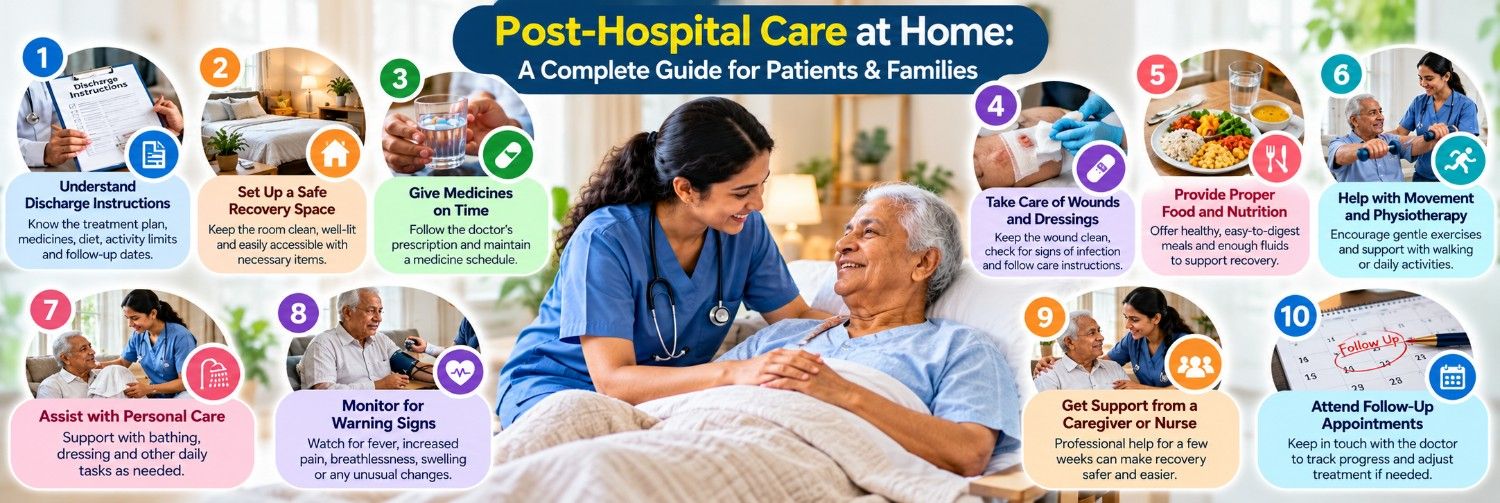
Post-hospital care at home means looking after a patient’s recovery once they leave the hospital. It covers understanding the discharge instructions, setting up a safe room, giving medicines on time, caring for wounds, helping with food, movement and personal care, and watching for warning signs. Many patients also need a caregiver, nurse or physiotherapist for a few weeks.
Getting discharged from the hospital is usually a huge relief. After days of hospital rooms, medicines and medical care, everyone just wants to get home and settle back into normal life. But once you’re home, a different set of worries can come up. When should the medicines be given? Who will take care of the dressing? What if the fever comes back during the night? Suddenly, recovery at home can feel just as overwhelming as the hospital stay.
If that sounds familiar, you’re not alone. The first few days after hospital discharge are when families feel the most unsure, and also when good care matters the most. Patient care after discharge isn’t about doing everything perfectly. It’s about having a plan, knowing what to watch for and asking for help early.
Table of Contents
What Does Bedridden Patient Care at Home Involve?
Post-hospital care at home is the support a patient receives during recovery after leaving the hospital. It can include nursing, help with daily activities, medicine management, wound care, physiotherapy and emotional support. The aim is simple: help the patient heal safely and avoid going back to hospital. Some people need only a little help for a week or two. Others need regular care for much longer.
You may also hear it called post discharge care, or home care after hospital discharge. Whatever the name, it sits between the hospital stay and getting back to normal life, and it usually involves the family, a doctor and sometimes trained professionals.
How Is Post-Hospital Care Different From Hospital Care?
In hospitals, nurses and doctors are always nearby, equipment is on hand and someone checks on the patient several times a day. At home, most of that falls to the family. Hospital care vs home care isn’t really a question of which is better. Hospitals treat the illness. Recovery at home is where the patient regains strength, routine and confidence.
What often surprises families most is how much responsibility comes with caring for someone at home. You may suddenly be the one giving medicines, keeping an eye on symptoms and deciding whether a change needs a call to the doctor. It can feel like a lot, especially when you’re already worried about your loved one. Having a clear plan for recovery can make those first few days at home much easier to manage.
What Should You Do Before Bringing a Patient Home?
Good discharge planning starts before the patient leaves the ward. Ask the hospital team to go through everything with you, and write down what they say. A simple hospital discharge checklist can save you from a lot of stress later. Here are the things to sort out before discharge.
Understand the Discharge Instructions
A discharge care plan gives you a clear idea of what needs to happen once the patient is back home. It usually covers medicines, diet, activity, wound care, tests and follow-up appointments. But discharge instructions can sometimes be long and packed with medical terms, so don’t hesitate to ask the doctor or nurse to explain anything you’re unsure about. If possible, have another family member listen too. There is a lot to take in, and having two people hear the instructions can make it easier to remember what needs to be done at home.
Useful questions to ask: What can the patient eat? How much can they move? What symptoms should worry us? Who do we call after hours? Patient discharge instructions are only useful if you understand them.
Collect the Important Medical Documents
Before leaving, make sure you have the hospital discharge summary, which explains why the patient was admitted, what was done and what needs to happen next. Keep it, together with reports, scans, bills and prescriptions, in one folder. These medical records after discharge will be needed for follow-up visits, insurance claims and any new doctor or nurse who joins the care.
Ask for extra copies. Discharge documents often get misplaced in the first busy week.
Arrange Medicines and Supplies
Collect all discharge medicines before you go home, and check them against the prescription. If something is missing or unclear, ask the hospital pharmacy before leaving. Plan for medicines after hospital discharge to last until the first follow-up visit, and don’t wait until the last tablet to refill.
Medical supplies at home may include dressings, gloves, a thermometer, a blood pressure monitor, a glucometer, bed pads and adult diapers. Your discharge team can tell you which ones your patient needs.
Arrange Required Medical Equipment
Some patients need medical equipment after hospital discharge, such as a hospital bed at home, a wheelchair, a walker, a bedside commode or an oxygen concentrator. Ask the doctor or physiotherapist what is actually necessary. Renting is often more practical than buying for short-term use.
Get the home care equipment delivered and set up before the patient arrives, so you aren’t figuring out a hospital bed while someone is waiting in the car.
How to Prepare the Home for a Patient Returning From Hospital
A few small changes can make the house much safer. Preparing the home after hospital discharge doesn’t have to be expensive. Walk through the patient’s day in your head, from bed to bathroom to dining table, and look for anything that could cause a trip, a slip or a struggle. Home safety after hospital discharge is especially important for older adults, who are more likely to fall while weak.
Prepare the Patient's Room
Choose a room that is quiet, well-lit and close to the bathroom, ideally on the ground floor. The patient room setup should have the bed at a comfortable height, a side table with water, medicines, glasses and a phone, and a bell or mobile within reach. If a hospital bed is needed, leave enough space around it for a caregiver to move.
A home recovery setup also works better with good airflow, soft lighting and a chair for visitors. Keep the room clean and free of clutter.
Make the Bathroom Safer
Bathrooms are where many falls happen, so bathroom safety for elderly family members, and for anyone weak after surgery, is worth extra attention. Patient bathroom safety usually means:
- Non-slip mats inside and outside the shower
- Grab bars near the toilet and shower
- A stable shower chair and a handheld shower
- A raised toilet seat if bending is painful
- A night light on the way to the bathroom
If the patient can’t reach the bathroom safely, a bedside commode may be easier.
Clear Walking Paths
Fall prevention at home starts with the floor. Move loose rugs, wires, low furniture and shoes out of the way. Make sure hallways are well lit and doorways are wide enough for a walker or wheelchair. Simple home safety for patients also includes handrails on stairs and non-slip footwear.
These small fixes are the basis of elderly fall prevention too, since a fall after a hospital stay can undo weeks of recovery.
What Should Be Monitored After Hospital Discharge?
Patient monitoring at home is mostly about noticing change. You don’t need to be a nurse, but you do need to know what is normal for this patient and what isn’t. Monitoring after hospital discharge helps catch problems early, before they turn into another emergency.
Follow the Monitoring Instructions From the Doctor
Every patient is different, so the doctor’s instructions come first. Some patients need regular checks of temperature, pulse, blood pressure, oxygen level or blood sugar. Others need to watch their weight, swelling, urine output or wound. Ask the doctor which readings to take, how often, and what numbers mean it’s time to call. Write those numbers down.
Keep a Simple Recovery Record
A patient care record at home doesn’t need to be fancy. A notebook or phone note works well. Record the date, readings, medicines given, meals, sleep, pain, bowel and urine habits, and anything unusual. A home care chart like this makes follow-up visits easier, because you can show the doctor what happened instead of trying to remember. It also lets different family members share care without missing a dose or a check.
Recovery monitoring this way also helps you see progress, which is encouraging on slow days.
Medication Management After Hospital Discharge
Medication mistakes are one of the most common problems after leaving hospital. New medicines are added, old ones are stopped or changed, and the instructions can be confusing. Medication management after hospital discharge needs a bit of organisation, but it is very doable.
Create a Medication Schedule
Write down every medicine with its name, purpose, dose, time and whether it is taken with food. A simple medicine schedule for the patient, stuck where everyone can see it, prevents confusion when several people share care. Use a weekly pill organiser, a medication chart and phone alarms as a medication reminder.
- Tick each dose once it is given
- Store medicines away from heat and moisture
- Never crush tablets or open capsules without asking the doctor or pharmacist
- Never stop or change a medicine without medical advice
Medication schedule at home is only as good as the habit, so keep it simple.
Check for Changes to Previous Medicines
Compare the discharge medication list with what the patient took before admission. Medication changes after hospital discharge are common: some tablets are stopped, doses are adjusted, and new ones are added. Don’t restart old medicines at home just because the box is still in the cupboard.
If anything is unclear, or if the patient’s old and new medicines seem to overlap, ask the doctor or pharmacist before the next dose.
When Is Professional Nursing Support Needed?
A home nurse after hospital discharge can help when medicines are complicated or the patient can’t manage them alone. Nursing care at home is useful for injections, IV medicines, insulin, wound dressings or regular monitoring. Medication support at home from a trained nurse also reduces the risk of missed or doubled doses. You can read about nursing care at home with Medifyhome.
Wound and Dressing Care After Hospital Discharge
Wound care at home is something many families worry about, especially after an operation. The hospital team will usually tell you how to look after the wound, and you should follow that closely. The notes below are general, and they don’t replace the surgeon’s instructions.
How to Keep a Surgical Wound Clean
For surgical wound care at home, start by washing your hands well before touching the dressing. Keep the area clean and dry, and change the dressing only as often as advised. Wound dressing at home should be done with clean hands and the supplies the hospital recommended.
- Ask the surgeon when the patient can shower and whether the dressing must stay dry
- Don’t apply creams, powders or home remedies unless the doctor says so
- Don’t pick at stitches or scabs
- Loose clothing helps avoid rubbing on the wound
Post surgery wound care also includes good nutrition and rest, which help the skin heal.
When Should a Wound Be Checked by a Healthcare Professional?
Wound infection signs can appear days after discharge. Call the doctor or nurse if you notice:
- Redness that is spreading, or skin around the wound that feels hot
- Swelling, increasing pain or a hard area
- Pus, a bad smell or fluid that keeps leaking
- The edges of the wound opening up
- Fever or chills
These surgical wound warning signs mean wound complications could be starting, and it is better to be checked early than to wait.
Nutrition and Hydration During Recovery at Home
Healing takes energy, and many patients come home with poor appetite or lost weight. Nutrition after hospital discharge supports wound healing, strength and immunity. In general, a recovery diet includes enough protein, fruit, vegetables and fluids, though the exact diet after surgery or illness depends on the doctor’s advice.
Protein from eggs, dal, curd, paneer, milk, fish or chicken helps tissues repair. Smaller, more frequent meals are often easier than three large ones. Hydration after hospital discharge matters too, particularly in hot weather, unless the doctor has limited fluids.
Helping a Patient Eat and Drink Safely
When feeding a patient at home, make sure they are sitting upright, as straight as comfortable, and stay upright for about 30 minutes after eating. Offer small amounts, go slowly, and don’t feed someone who is drowsy or coughing. Meal assistance at home can be as simple as cutting food, sitting with the patient or reminding them to eat.
Keep a glass of water within reach, because hydration for patients often falls behind when they feel too weak to ask.
When Does a Patient Need a Special Diet?
A special diet after hospital discharge is common for patients with diabetes, kidney disease, heart problems or high blood pressure. A diabetic diet after discharge, for example, needs careful attention to carbohydrates and meal timing. Always follow the hospital’s diet plan or ask a dietitian.
Swallowing problems after hospital stays, such as coughing at meals, a wet voice after drinking or food getting stuck, should be reported to the doctor. The patient may need a swallowing assessment and softer or thickened foods. Please don’t change textures on your own.
Mobility and Physiotherapy After Hospital Discharge
Even a few days in bed can leave muscles weak. Physiotherapy after hospital discharge helps patients regain strength, balance and confidence, and can reduce the risk of falls, stiffness and blood clots. How much movement is safe depends on the condition, so follow the doctor’s advice. Mobility after surgery in particular should be guided by the surgeon.
Helping a Patient Move Safely
Patient mobility at home starts with going slowly. Let the patient sit at the edge of the bed for a minute before standing, make sure footwear is non-slip, and stay close. For a patient transfer at home, such as bed to chair, ask a physiotherapist or nurse to show you the technique first. Lock the wheelchair brakes, use a transfer belt if advised, and ask another person to help if the patient is heavy or unsteady.
Safe patient transfer protects the caregiver’s back as much as the patient’s hips.
When Is Physiotherapy Needed at Home?
Home physiotherapy after surgery is useful when the patient finds it hard to travel, is very weak, or has had a fracture, joint replacement, stroke or long illness. Rehabilitation at home also lets the therapist work in the patient’s own space, with their own bed, stairs and bathroom. Find out more about physiotherapy at home with Medifyhome.
Personal Care After Hospital Discharge
Daily care at home is the part that fills most of the day: washing, dressing, toileting, eating and resting. Personal care after hospital discharge should help the patient feel clean and comfortable while letting them do whatever they safely can on their own. For many patients, and especially for elderly care after discharge, this support makes the difference between coping and struggling.
Bathing and Grooming
Bathing support may include a shower with a chair or a sponge bath in bed if the patient is weak. Keep the room warm, have essentials ready and protect dressings. Personal care also includes brushing teeth, combing hair and grooming, helping the patient feel clean and comfortable.
Toileting and Continence Support
Offer toileting help patiently and respectfully, as some patients may feel embarrassed. A commode, urinal or bedpan can help when walking is difficult. For incontinence, change pads promptly, clean and dry the skin gently, and keep the area clean to help prevent rashes, infections and pressure sores.
Maintaining Comfort and Dignity
Patient dignity at home comes from small things: knocking before entering, covering the patient during care, asking before doing things for them, and talking to them, not about them. Compassionate patient care is mostly patience. This holds for any elderly home care too. Many older adults worry about being a burden, and respectful care helps them feel like themselves.
Emotional Support During Recovery at Home
Recovery isn’t only physical. Emotional support after hospital discharge matters because many patients feel anxious, tired or low in the weeks after a serious illness. Patient recovery at home goes better when someone listens, reassures them and keeps life from feeling empty. For older people, elderly emotional support can include regular visits, phone calls and familiar routines.
Changes Families May Notice
Emotional changes after hospitalization are common. Families may notice irritability, tearfulness, fear of being alone, trouble sleeping, loss of interest or, in older adults, confusion that wasn’t there before. Some of this settles as strength returns. But if low mood, anxiety or confusion persists or worsens, talk to the doctor. Recovery after hospitalization is easier when emotional changes are taken seriously.
Keeping the Patient Involved
Patient independence at home is part of healing. Let the patient make small choices, like what to wear or eat, take part in family conversations and do the tasks they safely can. Elderly independence is worth protecting, even if tasks take longer. A bit of recovery support, a little encouragement and realistic goals often work better than doing everything for them.
Common Types of Patients Who May Need Post-Hospital Care
Many people can benefit from care after leaving hospital. These are the groups we see most often:
Patients Recovering After Surgery
Post-surgery care at home usually focuses on wound care, pain control, gentle movement and spotting complications such as infection or bleeding. Post-operative care at home also means following the surgeon’s advice on diet, activity and follow-up visits.
Elderly Patients After Hospitalization
Elderly care after hospital discharge needs extra attention, because older adults recover more slowly and are at higher risk of falls, confusion, poor appetite and medicine mix-ups. Senior care at home during this period often involves a caregiver, regular monitoring and a safer home setup.
Patients Recovering From Stroke or Neurological Conditions
Stroke recovery at home can involve weakness on one side, difficulty speaking or swallowing and fatigue. Stroke patient care at home usually combines nursing, physiotherapy, speech therapy and emotional support. Neurological rehabilitation at home also applies to conditions like Parkinson’s disease or spinal injury, where regular therapy matters.
Patients Recovering From Fractures or Orthopedic Procedures
Recovery after a fracture can look different depending on the treatment or procedure. At home, orthopaedic care usually focuses on managing pain, helping the patient move safely, reducing the risk of blood clots and protecting the skin. Once the doctor confirms that it is safe to start, physiotherapy can help gradually rebuild strength, movement and confidence.
Patients Who Were Hospitalized for a Long Period
Recovery after prolonged hospitalization can be slow. Muscles weaken, appetite falls and confidence drops. Post hospital rehabilitation, gentle exercise, good nutrition and patient encouragement all help, and progress may take weeks or months.
How Long Does Post-Hospital Care at Home Last?
There’s no single answer. How long post hospital care lasts depends on the illness, the patient’s age and how well recovery goes. Recovery time after hospital discharge can be a few days for a minor procedure or many months after a stroke or major surgery. Your doctor can give a rough idea, and it is normal for the plan to change.
Short-Term Home Care
Short term home care suits patients who are expected to recover fully within days or weeks, such as after a minor surgery or infection. Temporary home nursing may be enough for dressings, injections or a few weeks of monitoring, with a caregiver helping at first and stepping back as strength returns.
Long-Term Home Care
Long-term home care is for patients with lasting needs, such as stroke, advanced age, frailty or conditions that need ongoing management. Elderly long-term care at home and chronic patient care at home often combine a regular caregiver, nursing visits, physiotherapy and doctor follow-ups. The plan should be reviewed every few weeks, because needs change.
When Does a Patient Need a Home Nurse After Hospital Discharge?
Not every patient needs a nurse. The question is whether the care involves medical tasks that need training. Here’s how to think about a home nurse after hospital discharge.
When a Caregiver May Be Enough
A caregiver after hospital discharge is often enough when the patient is medically stable but needs help with daily living, such as bathing, dressing, meals, walking and company. A patient caregiver at home can also remind the patient about medicines and report concerns. Many elderly caregiver arrangements start this way.
When a Qualified Nurse May Be Required
A qualified home nurse is the right choice for injections, IV therapy, wound and drain care, catheters, feeding tubes, oxygen therapy, insulin and close monitoring. Nursing care after discharge is also valuable in the first week or two, when complications are most likely. Home nursing after surgery gives families the reassurance that someone trained is watching for trouble. Professional home nursing is available through Medifyhome
Warning Signs After Hospital Discharge
Knowing the warning signs after hospital discharge helps you act quickly. Most post discharge complications are easier to manage when caught early. When in doubt, call the doctor.
General Warning Signs Families Should Not Ignore
Contact the doctor the same day if the patient has:
- Fever or chills
- New or worsening pain
- Vomiting or diarrhoea that doesn’t settle
- Swelling, redness or discharge from a wound
- Very little urine or very dark urine
- Swelling or pain in one leg
- Increasing weakness, drowsiness or confusion
- Refusing food and fluids
These are patient warning signs that need medical attention, even if they don’t seem dramatic.
Treat the following as emergency signs after hospital discharge, and call an ambulance (112 or 102 in India) or go to the nearest hospital: chest pain, severe breathlessness, blue lips, fainting, a seizure, heavy bleeding, sudden weakness or slurred speech, or not responding normally. Post hospital complications can worsen fast, so don’t wait.
When Should You Contact the Doctor After Discharge?
Besides the warning signs above, reach out to the doctor whenever something feels off. Contact the doctor after discharge if the patient can’t take medicines, isn’t improving as expected, has new symptoms, or if you’re unsure about instructions. You know the patient best, so trust your instinct. A doctor visit at home can help when travelling to the clinic is difficult.
Keep Follow-Up Appointments
Doctor follow-up after hospital discharge is a key part of recovery as it lets the doctor check healing, review tests, adjust medicines and answer questions. Don’t skip it because the patient seems better. Post-discharge follow-up often catches things that aren’t obvious at home. Bring the recovery record, medicine list and discharge summary.
How Family Members Can Share Post-Hospital Care Responsibilities
Caring for a recovering patient is demanding, and one person often ends up doing most of it. Family caregiver support starts with dividing the work. A post-hospital caregiver who is exhausted can’t give good care. Talk openly about caregiver responsibilities such as medicines, meals, appointments, night duty and paperwork, and decide who does what. Family patient care works better when everyone knows their part.
Create a Simple Care Schedule
A patient care schedule does not have to be complicated. A simple one-page plan can list what needs to be done in the morning, afternoon, evening and at night, along with the person responsible for each task. It is also helpful to include rest days and a backup caregiver so that one person does not end up doing everything. Keeping a regular routine can help the patient feel more comfortable and make it easier for another family member or caregiver to take over when needed.
Post-Hospital Care Checklist for Families
Print this and keep it somewhere visible. Tick items off as you go, and adjust for your patient’s condition.
| Category | Checklist Item | Done |
|---|---|---|
|
Before discharge
|
Understand the discharge instructions and ask questions
|
✔️ |
|
|
Collect the discharge summary, reports and prescriptions
|
✔️ |
|
|
Get all discharge medicines and check them against the list
|
✔️ |
|
|
Arrange equipment such as a bed, wheelchair or commode
|
✔️ |
|
|
Note the doctor’s contact number and follow-up date
|
✔️ |
|
Home setup
|
Room is quiet, clean and close to the bathroom
|
✔️ |
|
|
Bathroom has non-slip mats and grab bars
|
✔️ |
|
|
Walking paths are clear, with good lighting
|
✔️ |
|
|
Water, medicines, phone and a call bell are within reach
|
✔️ |
|
Medicines
|
Medicine schedule is written and visible
|
✔️ |
|
|
Old and new medicines have been compared with the doctor
|
✔️ |
|
|
Doses are ticked off after each time
|
✔️ |
|
Monitoring
|
Readings are taken as advised (temperature, BP, sugar, oxygen)
|
✔️ |
|
|
Recovery record is updated daily
|
✔️ |
|
|
Wound is checked daily for redness, swelling or discharge
|
✔️ |
|
Daily care
|
Patient is washed, groomed and comfortable
|
✔️ |
|
|
Meals and fluids are offered regularly
|
✔️ |
|
|
Patient has moved or exercised as advised
|
✔️ |
|
|
Toileting needs are met, and skin is kept dry
|
✔️ |
|
Follow-up
|
Follow-up appointments are booked
|
✔️ |
|
|
Warning signs are known by everyone caring for the patient
|
✔️ |
|
|
Emergency numbers are on the wall or in the phone
|
✔️ |
|
Family support
|
Care tasks are shared and rest breaks are planned
|
✔️ |
|
|
Professional help has been considered if needed
|
✔️ |
How to Choose a Post-Hospital Home Care Provider
Choosing a home care provider is a big decision, because you’re inviting someone into the house at a vulnerable time. A good post hospital home care provider starts by understanding the patient’s condition and the discharge plan, not by pushing a package. Look for clear information on staff training, supervision, pricing and what happens if the assigned nurse or caregiver is unavailable. Compare a few options before choosing a home nursing provider or caregiver service.
Questions to Ask Before Starting Care
These questions to ask a home care provider make the decision easier when hiring a home nurse or choosing a caregiver:
- What qualifications and training do your nurses and caregivers have?
- How are they verified and background-checked?
- Have they cared for patients with a similar condition?
- Who supervises them, and who do I call if there is a problem?
- What is included in the service, and what costs extra?
- What happens if the nurse or caregiver can’t come?
- Can the plan change as the patient recovers?
- Will you coordinate with our doctor and physiotherapist?
- How are emergencies handled, especially at night?
- Can we meet the caregiver or nurse before care begins?
Book 24*7 Service
Frequently Asked Questions
What is post-hospital care at home?
Post-hospital care at home is the support a patient gets during recovery after leaving the hospital. It can include medicine management, wound care, nursing, help with daily activities, physiotherapy, nutrition and emotional support, so the patient heals safely and avoids returning to hospital.
What should I do immediately after a patient is discharged from the hospital?
Settle the patient in a safe, comfortable room, check the medicines against the discharge list, and follow the first instructions on diet, activity and wound care. Note the doctor’s number and follow-up date, and watch closely for any warning signs in the first few days.
How do I prepare my home after hospital discharge?
Prepare a clean, well-lit room close to the bathroom, with the bed at a comfortable height and everyday essentials within easy reach. Put non-slip mats and grab bars where needed, keep the walking areas clear, and have any equipment, such as a hospital bed or wheelchair, ready before the patient comes home.
What should be included in a hospital discharge checklist?
A good checklist covers the discharge summary, prescriptions, reports, medicine list, diet and activity instructions, wound care, equipment, follow-up dates and emergency contacts. Add questions for the doctor, and a plan for who will help at home.
Does a patient need a nurse after hospital discharge?
Not always. A nurse is helpful when care involves injections, IV medicines, wound dressings, catheters, feeding tubes, oxygen or close monitoring. Patients who only need help with daily activities may manage with a trained caregiver. The doctor can advise what suits your patient.
What is the difference between a caregiver and a home nurse after discharge?
A caregiver helps with daily activities like bathing, meals, walking and company. A home nurse is medically trained and handles tasks such as injections, wound care, catheters and checking vitals. Some patients need only one, and others need both at different stages of recovery.
How long does post-hospital care at home last?
It varies. Care may last a few days after minor procedures or several months after a stroke, major surgery or long illness. The doctor can give an estimate, and the plan usually changes as the patient recovers and needs less help.
Can physiotherapy be provided at home after hospital discharge?
Yes. A physiotherapist can visit the home to help with strength, balance, safe movement and pain, and can teach the family simple exercises. Home sessions are especially useful after surgery, fractures, stroke or a long hospital stay when travelling is difficult.
What warning signs should families watch for after discharge?
Watch for fever, worsening pain, wound redness or discharge, vomiting, very little urine, a swollen leg, new confusion or weakness. Chest pain, severe breathlessness, fainting or heavy bleeding need emergency help immediately. If you are unsure, call the doctor.
When should I arrange professional home care after hospital discharge?
Consider arranging home care if the patient needs medical attention, is elderly or very weak, lives alone, or if the family is finding it difficult to manage everything. If possible, arrange the support before discharge so the caregiver or nurse is ready when the patient gets home.
Conclusion
Coming home from the hospital is a relief, but it is also the beginning of the next stage of recovery. Most post-hospital care comes down to a few simple, consistent things: understanding the discharge instructions, preparing the home, giving medicines on time, keeping an eye out for warning signs, making sure the patient eats well, stays comfortable and moves safely, and keeping up with all follow-up appointments.
You don’t have to get everything right on day one, and you don’t have to do it alone. A simple recovery record, a shared care schedule and the right professional help can make recovery at home safer and calmer for everyone.
If you’d like trained support at home, Medifyhome offers nursing care at home, physiotherapy at home and doctor visits at home, so your loved one can recover in familiar surroundings.
Related Blogs

Dengue in 2026: Why It’s Changing in India, Symptoms, Tests, WarningRead More

Urinary Catheter Care at Home: A Complete Guide for Patients andRead More
Post-Hospital Care at Home: A Complete Guide for Patients & FamiliesRead More
10 Signs an Elderly Parent May Need Home Care Support AnRead More

How to Care for a Bedridden Patient at Home: A CompleteRead More